Puzzle: Factoring Trinomials

Factoring Puzzle

My high school class ended the year with a review of multiplying and factoring simple polynomials. We played this matching game, and then I gave them a puzzle worksheet. I liked this idea, but I didn’t like the decoded answer. In my opinion, puzzles should give the student a “reward” for solving them — maybe a joke or riddle or something — but that answer seemed almost like nagging.

So I changed things around to make my own version:
Continue reading Puzzle: Factoring Trinomials

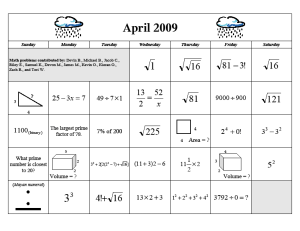
April Math Calendar

april-math-calendar

My homeschool co-op classes had a lot of fun creating this April calendar to hand out at our end-of-semester party on Friday. It’s not as easy to read as a traditional calendar — it is more like a puzzle. The expression in each square simplifies to that day’s date, so families can treat each day like a mini-review quiz: “Do you remember how to calculate this?”

Download your own copy:

If you’ve been wanting to start your own math club, you will find plenty of helpful ideas here:

Update

Check out my May Math Calendar post for more ideas about how to use these puzzles.

 
* * *

This blog is reader-supported.

If you’d like to help fund the blog on an on-going basis, then please join me on Patreon for mathy inspiration, tips, and an ever-growing archive of printable activities.

If you liked this post, and want to show your one-time appreciation, the place to do that is PayPal: paypal.me/DeniseGaskinsMath. If you go that route, please include your email address in the notes section, so I can say thank you.

Which I am going to say right now. Thank you!

“April Math Calendar” copyright © 2009 by Denise Gaskins.

Math Game: Logarithm War

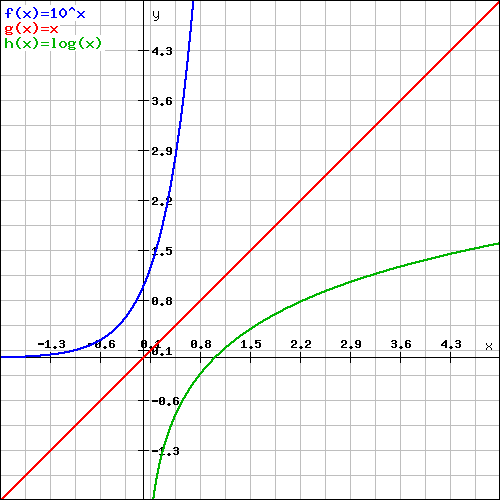
[Graph created at Draw Function Graphs.]

Kate at f(t) took my popular Math War game to a new level by making a set of Logarithm War cards. Cool! Download a deck for yourself:

Update

Logs and Trig War—Jim Pai extended Kate’s logarithm war to include trig functions. Double the cards, double the fun! Download from Jim’s blog: War: what is it good for?

Happy Square Root Day!

square-roots-by-arsheffield
[Photo by arsheffield.]

Check it out:

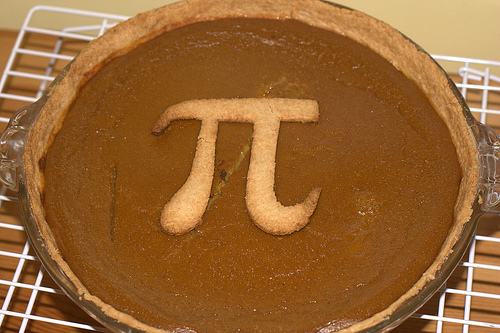
And coming soon: Pi Day.

Edited to add: Jonathan‘s class enjoyed extending the concept to include other products. Using the m/d/yy format (not the 4-digit year), how many times in your life has it been true that month \times day = year ?

Math Warm-Up: Today Is February 4×3×2×1

[Feature photo above by Tom@HK.]

One of my favorite warm-up exercises for Math Club is “Today is ______.” Each student invents one or more mathematical expressions for today’s date and writes his or her favorite on the board for all to admire. Answers range from lazy (24×1 — at least it’s an excuse to talk about identity elements) to unnecessarily repetitive (1+1+1+…), but we usually get a few gems as well.

Continue reading Math Warm-Up: Today Is February 4×3×2×1

Cute Math Facts for Visual Thinkers

numberwalk[Photo by angela7dreams.]

A forum friend posted about her daughter’s adventure in learning the math facts:

“She loves stories and drawing, so I came up with the Math Friends book. She made a little book, and we talked about different numbers that are buddies.”

Continue reading Cute Math Facts for Visual Thinkers

2009 Mathematics Game

new-year
[Photo by Amanda M Hatfield.]

Have you made a resolution to exercise your mental muscles this year? Then please join us for the 2009 Mathematics Game. Here are the rules:

Use the digits in the year 2009 and the operations +, -, x, ÷, sqrt (square root), ^ (raise to a power), and ! (factorial) — along with parentheses, brackets, or other grouping symbols — to write expressions for the counting numbers 1 through 100.

  • All four digits must be used in each expression.
  • Only the digits 2, 0, 0, 9 may be used.
  • The decimal point may be used, as in .9, .02, etc.
  • Multi-digit numbers such as 29 or 902 may be used, but preference is given to solutions that avoid them.

By definition: 0! = 1 .
[See Dr. Math’s Why does 0 factorial equal 1?]

For this game we will accept: {0}^{0} = 1 .
[See the Dr. Math FAQ 0 to the 0 power.]

Continue reading 2009 Mathematics Game