Math Teachers at Play #52

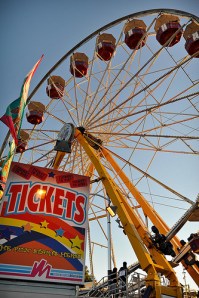
[Photo by bumeister1 via flickr.]

Welcome to the Math Teachers At Play blog carnival — which is not just for math teachers! We have games, lessons, and learning activities from preschool math to calculus. If you like to learn new things and play around with mathematical ideas, you are sure to find something of interest.

Scattered between all the math blog links, I’ve included highlights from the Common Core Standards for Mathematical Practice, which describe the types of expertise that teachers at all levels — whether in traditional, experimental, or home schools — should seek to develop in their math students.

Let the mathematical fun begin…

TRY THESE PUZZLES

By tradition, we start the carnival with a couple of puzzles in honor of our 52nd edition. Since there are 52 playing cards in a standard deck, I chose two card puzzles from the Maths Is Fun Card Puzzles page:

  • A blind-folded man is handed a deck of 52 cards and told that exactly 10 of these cards are facing up. How can he divide the cards into two piles (which may be of different sizes) with each pile having the same number of cards facing up?
  • What is the smallest number of cards you must take from a 52-card deck to be guaranteed at least one four-of-a-kind?

The answers are at Maths Is Fun, but don’t look there. Having someone give you the answer is no fun at all!

Continue reading Math Teachers at Play #52

Tell Me a (Math) Story

[Feature photo above by Keoni Cabral via Flickr (CC BY 2.0).]

My favorite playful math lessons rely on adult/child conversation — a proven method for increasing a child’s reasoning skills. What better way could there be to do math than snuggled up on a couch with your little one, or side by side at the sink while your middle-school student helps you wash the dishes, or passing the time on a car ride into town?

As soon as your little ones can count past five, start giving them simple, oral story problems to solve: “If you have a cookie and I give you two more cookies, how many cookies will you have then?”

The fastest way to a young child’s mind is through the taste buds. Children can easily visualize their favorite foods, so we use mainly edible stories at first. Then we expand our range, adding stories about other familiar things: toys, pets, trains.

Continue reading Tell Me a (Math) Story

Skit: Knights and Knaves Logic Puzzles

photo by puuikibeach via flickr

Our homeschool co-op held an end-of-semester assembly. Each class was supposed to demonstrate something they had learned. I planned to set up a static display showing some of our projects, like the fractal pop-up card and the game of Nim, but the students voted to do a skit based on the logic puzzles of Raymond Smullyan.

We had a small class (only four students), but you can easily divide up the lines make room for more players. We created signs from half-sheets of poster board with each native’s line on front and whether she was a knight or knave on the flip side. In the course of a skit, there isn’t enough time to really think through the puzzles, so the audience had to vote based on first impressions — which gave us a fair showing of all opinions on each puzzle.

Continue reading Skit: Knights and Knaves Logic Puzzles

Raymond Smullyan Excerpts at Dover Publications

To celebrate their re-release of his classic puzzle books, the Dover Math and Science Newsletter featured an interview with Raymond Smullyan, as well as several extended excerpts from his books. (For my math club students: Professor Smullyan invented the Knights and Knaves puzzles.) Enjoy!

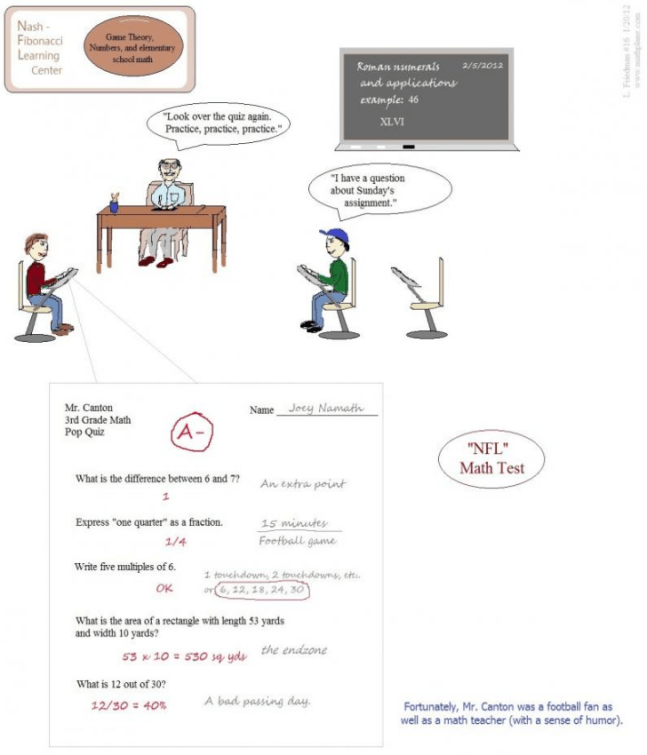
Super Bowl XLVI Math Worksheet and Football Comic

Lance Friedman of MathPlane.com has posted two bits of fun in honor of Super Bowl XLVI. (Click the images to go to Lance’s site.) And if you’re a homeschooler, Currclick is offering a Super Bowl Mini-Helper free this week.

NFL Math Quiz

Continue reading Super Bowl XLVI Math Worksheet and Football Comic

Fibonacci Numbers and Plants

Have you ever wondered why so many plants grow in Fibonacci Numbers? Vi Hart offers a great explanation (with hands-on activities) in these three videos — and she introduces a new species called the slugcat, which my daughter thinks is adorable.

Spirals, Fibonacci, and Being a Plant [1 of 3]

Continue reading Fibonacci Numbers and Plants

Math Teachers at Play #46: Living Books for Math
Welcome to the Math Teachers At Play blog carnival — which is not just for math teachers! Here is a smorgasbord of ideas for learning, teaching, and playing around with math from preschool to pre-college. Some articles were submitted by their authors, others were drawn from the immense backlog in my blog reader. If you like to learn new things, you are sure to find something of interest.

Living Books for Math

A child’s intercourse must always be with good books, the best that we can find… We must put into their hands the sources which we must needs use for ourselves, the best books of the best writers.

For the mind is capable of dealing with only one kind of food; it lives, grows and is nourished upon ideas only; mere information is to it as a meal of sawdust to the body.

Charlotte Mason
Toward A Philosophy of Education

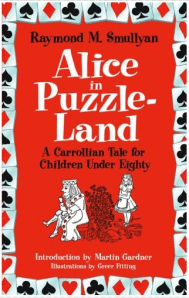
Princess Kitten and I took a longer than usual holiday break from homeschooling, but now I’m in plan-for-the-new-semester mode. I hope to include more living math in our schedule, so I decided to illustrate this edition of the MTaP carnival with a few of my favorite living math books. I’d love to hear more living book suggestions in the comments!

If you click on a book cover, the links take you to Amazon.com, where you can read reviews and other details (and where I earn a small affiliate commission if you actually buy the book), but all of these books should be available through your public library or via inter-library loan.

Let the mathematical fun begin…

Continue reading Math Teachers at Play #46: Living Books for Math