Blog

Every Day Is Math Day

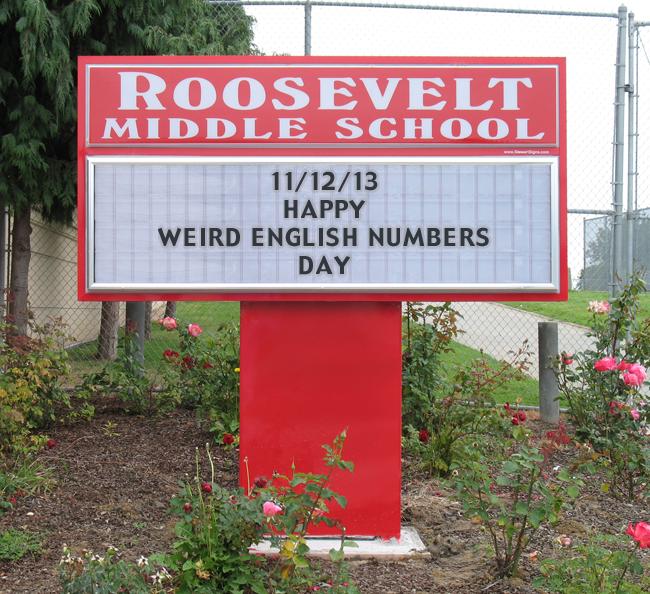
Happy 11-12-13

Happy 11/12/13, otherwise known as “tenty-one, tenty-two, tenty-three.”

Do your young children have trouble counting in the teens? Try making up Funny Numbers to help them! It’s a great habit to develop, because Funny Numbers will come in handy as mental math tools throughout their school math career.

If you’d like to make your own Happy Math Day post, check out the instructions here: Every Day Is Mathematics Day. And please share a link in the comments section below — I’d love to see what math holiday you invent!

Update: The numbers 11, 12, and 13 form an arithmetic progression. If that sounds too scary for your kids, check out Patrick’s bedtime math discussion Making Progress, Arithmetically.

Algebra for (Almost) Any Age

VisualPatterns-org2

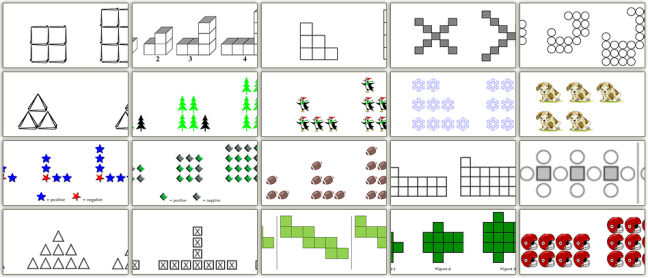
Fawn Nguyen’s Visual Patterns website just keeps getting better and better. Check it out:

In addition to the 115 puzzle patterns (as of this writing), the site features a Gallery page of patterns submitted by students. And under the “Teachers” tab, Fawn shares a form to guide students in thinking their way through to the algebraic formula for a pattern.

How can you use these patterns to develop algebraic thinking with younger students? Mike Lawler and sons demonstrate Pattern #1 in the YouTube video below.

A Good Problem Requires Dreaming Time

A-good-problem

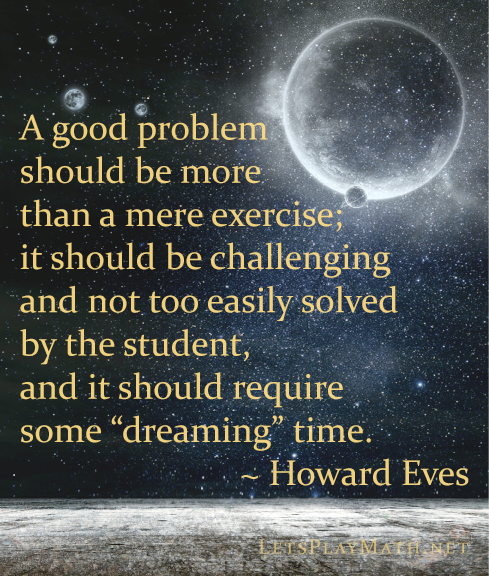
A good problem should be more than a mere exercise; it should be challenging and not too easily solved by the student, and it should require some “dreaming” time.

— Howard Eves

CREDITS: Today’s quote is from Howard Eves, An Introduction to the History of Mathematics. Background photo courtesy of Brenda Clarke (CC BY 2.0) via flickr.

Logic: The Centauri Challenge

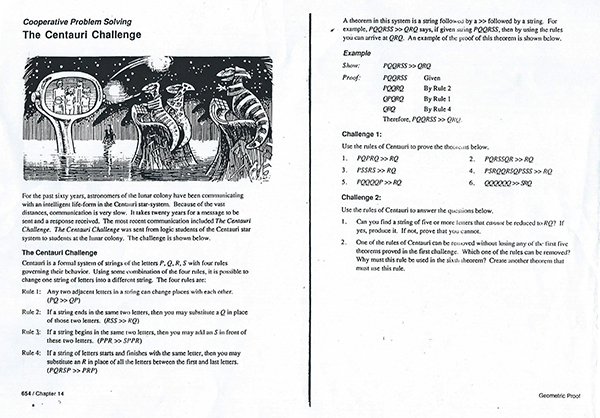
Another fun discovery from the #MTBoS Challenge: Brian Miller (@TheMillerMath) posted this interstellar puzzle on his blog today.

centaurichallenge
[Right-click image to download a pdf you can print for your students.]

More Logic Puzzles

If you liked the Centauri Challenge, you may also enjoy the following blog posts:

A Math Major Talks About Fear

I’ve dipped my toes in Twitter lately (as part of the Explore #MTBoS program) and been swept up in a crashing tsunami of information. There’s no way to keep up with it all, but I’ll let the tide wash over me and enjoy the tidbits I happen to notice as they float by. For instance, yesterday I discovered a writer who offers tip on writing about injuries and was able to get some great advice for Kitten’s sequel to her first novel.

And then today, Steven Strogatz posted a link to Saramoira Shields, a new blogger I might never have discovered on my own. I think you’ll enjoy her video:

Things To Do with a Hundred Chart #30

100chartpuzzle

Here’s one more entry for my 20+ Things to Do with a Hundred Chart post, thanks to David Radcliffe in the comments on Monday’s post:

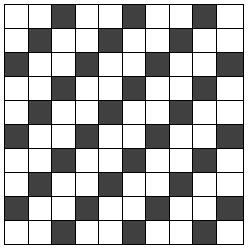
(30) Can you mark ten squares Sudoku-style, so that no two squares share the same row or column? Add up the numbers to get your score. Then try to find a different set of ten Sudoku-style squares. What do you notice? What do you wonder?
[Suggested by David Radcliffe.]

Share Your Ideas

Can you think of anything else we might do with a hundred chart? Add your ideas in the Comments section below, and I’ll add the best ones to our master list.

Math Teachers at Play #67 via Moebius Noodles

MathTeachersAtPlay67

This month’s Math Teachers at Play blog carnival features games, activities, and playful math from preschool to high school. Here are just a few treats from the carnival:

  • proofs for elementary students
  • Barbie does math
  • the dangers of timed testing
  • a puzzle for factoring trinomials
  • Minecraft math
  • coordinate graph-iti
  • and much more

It’s great fun! If you’re interested in how children learn math, check it out:

Things To Do with a Hundred Chart #29

100chart puzzle

Here’s a new entry for my 20+ Things to Do with a Hundred Chart post:

(29) Blank 100 Grid Number Investigations: Challenge your students to deduce the secret behind each pattern of shaded squares. Then have them make up pattern puzzles of their own.
[Created by Stuart Kay. Free registration required to download pdf printable.]

Share Your Ideas

Can you think of anything else we might do with a hundred chart? Add your ideas in the Comments section below, and I’ll add the best ones to our master list.

Maze Game: Land or Water?

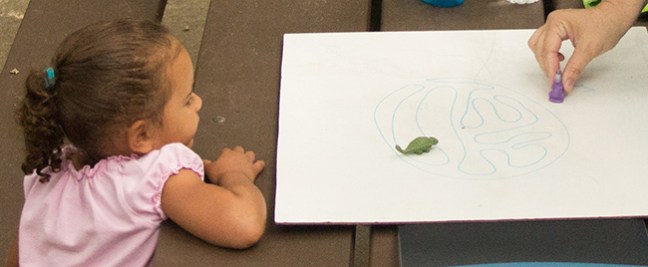
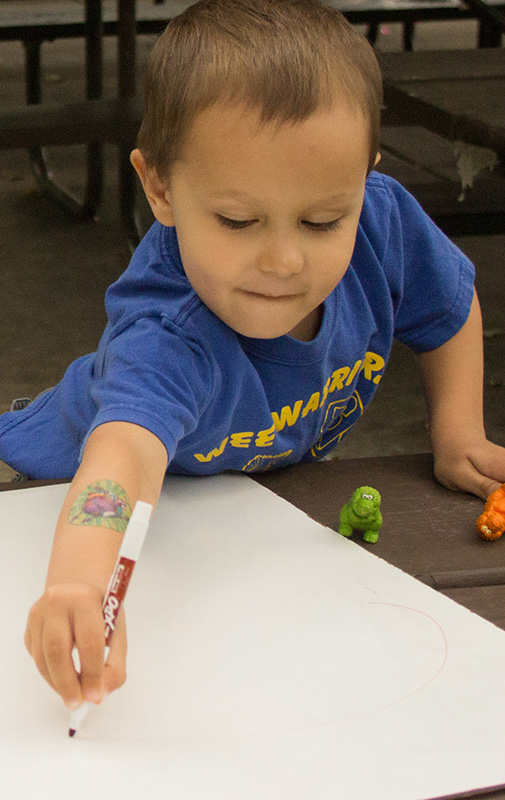
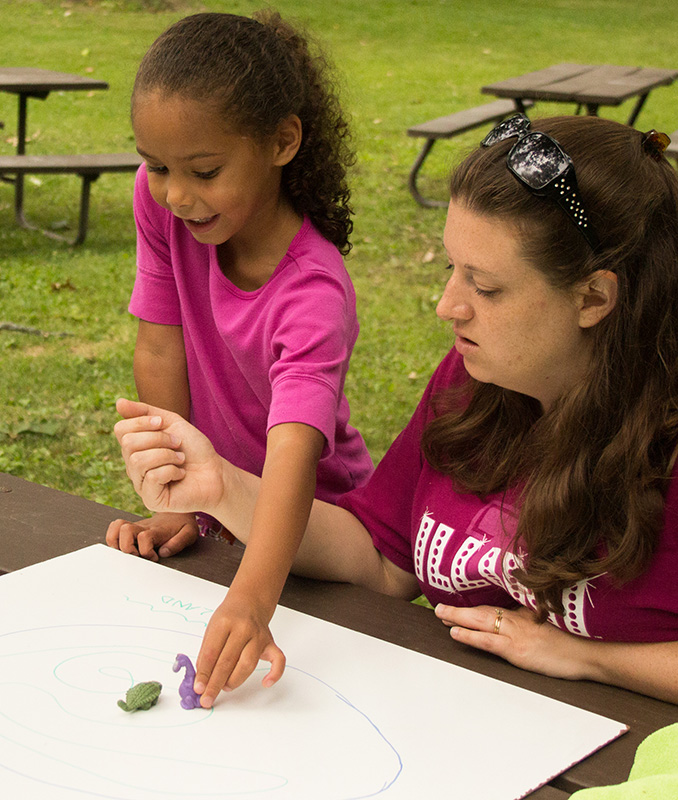
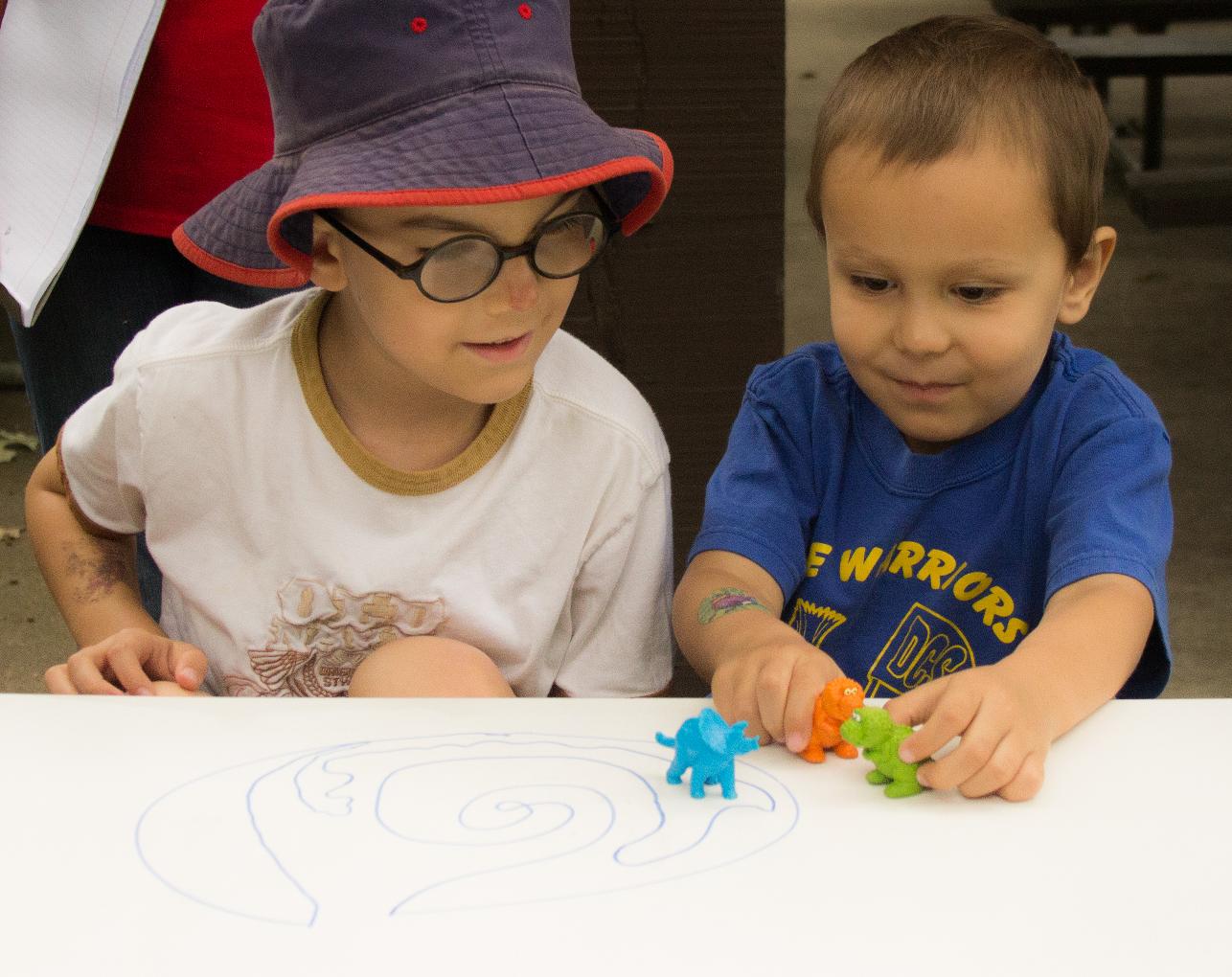
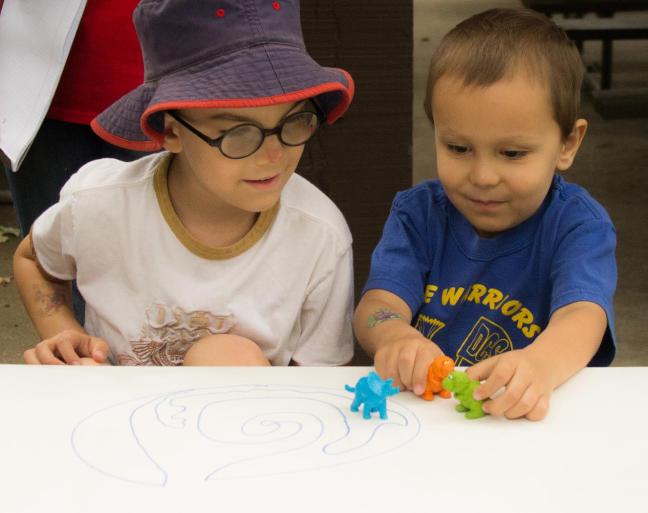
This was a fun activity from Moebius Noodles for our PK-1st grade Homeschool Math in the Park group. The children take turns making a maze and setting a dinosaur inside. Then the other dinosaurs (parents or siblings) try to guess whether their friend is on the land or in the water.

Draw the maze

Player #1

(1) First, draw a big circle on the white board. This is your lake.

(2) With a finger or a bit of cloth, erase a small section of the circle to create the opening for your maze.

(3) Starting at one edge of the opening, draw a random squiggle inside the circle. Make your squiggle end at the other edge of the opening.
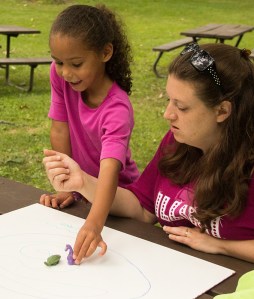
Looks like Land

(4) Set your dinosaur anywhere inside the maze.

Player #2

(1) Now it’s your turn to guess. Is the dinosaur standing on the land? Is it swimming in the water?

(2) How will you figure out if you guessed right?

(3) Check by jumping across the lines of the maze. Each jump takes you across a boundary: Splash! (Into the water.) Thump! (Back on the land.) Splash! Thump! … Until you reach the dinosaur inside.

(4) Or go to the maze entrance and walk your dinosaur along the path. Can you find your way?
land or water

 
* * *

This blog is reader-supported.

If you’d like to help fund the blog on an on-going basis, then please join me on Patreon for mathy inspiration, tips, and an ever-growing archive of printable activities.

If you liked this post, and want to show your one-time appreciation, the place to do that is PayPal: paypal.me/DeniseGaskinsMath. If you go that route, please include your email address in the notes section, so I can say thank you.

Which I am going to say right now. Thank you!

“Maze Game: Land or Water?” copyright © 2013 by Denise Gaskins. All photos copyright © Denise Gaskins.