December Advent Math from Nrich

[Feature photo (above) by Austin Kirk via Flickr (CC BY 2.0).]

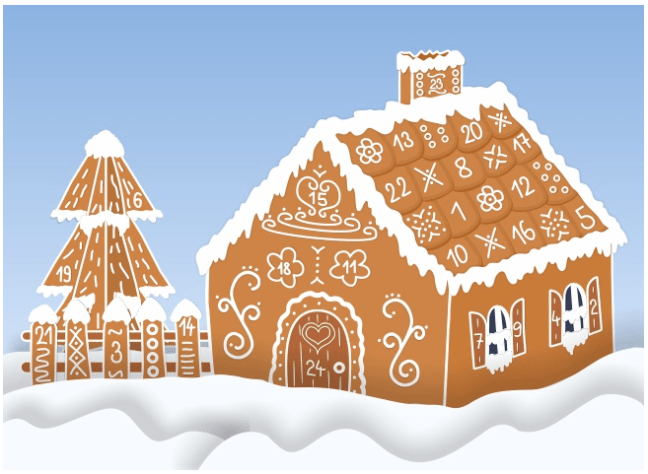
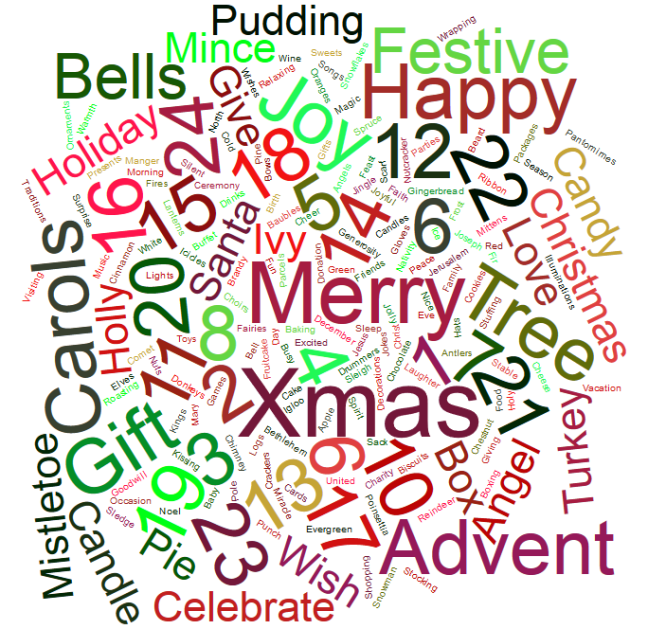
Click on the pictures below to explore a mathy Advent Calendar with a new game, activity, or challenge puzzle for each day during the run-up to Christmas. Enjoy!

Advent Calendar 2014 – Primary

adventprimary

Advent Calendar 2014 – Secondary

adventsecondary

Math Debates with a Hundred Chart

Euclid game
Wow! My all-time most popular post continues to grow. Thanks to an entry from this week’s blog carnival, there are now more than thirty great ideas for mathematical play:

The latest tips:

(31) Have a math debate: Should the hundred chart count 1-100 or 0-99? Give evidence for your opinion and critique each other’s reasoning.
[Hat tip: Tricia Stohr-Hunt, Instructional Conundrum: 100 Board or 0-99 Chart?]

(32) Rearrange the chart (either 0-99 or 1-100) so that as you count to greater numbers, you climb higher on the board. Have another math debate: Which way makes more intuitive sense?
[Hat tip: Graham Fletcher, Bottoms Up to Conceptually Understanding Numbers.]

(33) Cut the chart into rows and paste them into a long number line. Try a counting pattern, or Race to 100 game, or the Sieve of Eratosthenes on the number line. Have a new math debate: Grid chart or number line — which do you prefer?
[Hat tip: Joe Schwartz, Number Grids and Number Lines: Can They Live Together in Peace? ]

Roadmap to Mathematics: 3rd Grade

roadmap3

A frequently-asked question on homeschooling forums is, “Are my children working at grade level? What do they need to know?”

The Council of the Great City Schools has published a handy 6-page pdf summary of third grade math concepts, with suggestions for how parents can support their children’s learning:

Whether you are a radical unschooler or passionately devoted to your textbook — or, like me, somewhere in between — you can help your children toward these grade-level goals by encouraging them to view mathematics as mental play. Don’t think of the standards as a “to do” list, but as your guide to an adventure of exploration. The key to learning math is to see it the mathematician’s way, as a game of playing with ideas.

The following are excerpts from the roadmap document (along with a few extra tips) and links to related posts from the past eight years of playing with math on this blog…

Continue reading Roadmap to Mathematics: 3rd Grade

Roadmap to Mathematics: 2nd Grade

roadmap2

A frequently-asked question on homeschooling forums is, “Are my children working at grade level? What do they need to know?”

The Council of the Great City Schools has published a handy 6-page pdf summary of second grade math concepts, with suggestions for how parents can support their children’s learning:

Whether you are a radical unschooler or passionately devoted to your textbook — or, like me, somewhere in between — you can help your children toward these grade-level goals by encouraging them to view mathematics as mental play. Don’t think of the standards as a “to do” list, but as your guide to an adventure of exploration. The key to learning math is to see it the mathematician’s way, as a game of playing with ideas.

The following are excerpts from the roadmap document (along with a couple of extra tips) and links to related posts from the past eight years of playing with math on this blog…

Continue reading Roadmap to Mathematics: 2nd Grade

Horseshoes: A Place Value Game

[Feature photo above by Johnmack161 via Wikimedia Commons (CC BY 2.5).]

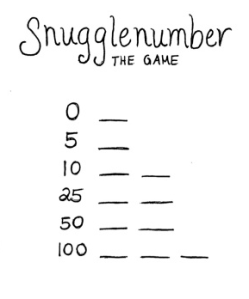
I first saw place value games on the old PBS Square One TV show (video below). Many teachers have posted versions of the game online, but Snugglenumber by Anna Weltman is by far the cutest variation. Anna kindly gave me permission to use the game in my upcoming Math You Can Play book series, and I added the following variation:

Horseshoes

snugglenumber

Math Concepts: place value, strategic thinking.
Players: two or more.
Equipment: one deck of playing cards, or a double deck for more than three players.

Separate out the cards numbered ace (one) through nine, plus cards to represent the digit zero. We use the queens (Q is round enough for pretend), but you could also use the tens and just count them as zero.

Shuffle well and deal eleven cards to each player. Arrange your cards in the snugglenumber pattern shown here, one card per blank line, to form numbers that come as close to each target number as you can get it.

Continue reading Horseshoes: A Place Value Game

Fractions: 1/5 = 1/10 = 1/80 = 1?

[Feature photo is a screen shot from the video “the sausages sharing episode,” see below.]

Fractions: 1/5 = 1/10 = 1/80 = 1?

How in the world can 1/5 be the same as 1/10? Or 1/80 be the same as one whole thing? Such nonsense!

No, not nonsense. This is real-world common sense from a couple of boys faced with a problem just inside the edge of their ability — a problem that stretches them, but that they successfully solve, with a bit of gentle help on vocabulary.

Here’s the problem:

  • How can you divide eight sausages evenly among five people?

Think for a moment about how you (or your child) might solve this puzzle, and then watch the video below.

What Do You Notice?

Continue reading Fractions: 1/5 = 1/10 = 1/80 = 1?

Reblog: A Mathematical Trauma

Feature photo (above) by Jimmie via flickr.

My 8-year-old daughter’s first encounter with improper fractions was a bit more intense than she knew how to handle.

I hope you enjoy this “Throw-back Thursday” blast from the Let’s Play Math! blog archives:


Photo (right) by Old Shoe Woman via Flickr.

Nearing the end of Miquon Blue today, my youngest daughter encountered fractions greater than one. She collapsed on the floor of my bedroom in tears.

The worksheet started innocently enough:

\frac{1}{2} \times 8=\left[ \quad \right]

[Click here to go read the original post.]

Multiplication Models Card Game

multfrac-300Update: An expanded version of this post is featured in my book Multiplication & Fractions: Math Games for Tough Topics, available now at your favorite online book dealer.

Homeschooling parents know that one of the biggest challenges for any middle-elementary math student is to master the multiplication facts. It can seem like an unending task to memorize so many facts and be able to pull them out of mental storage in any order on demand.

Too often, we are tempted to stress the rote aspect of such memory work, which makes our children lose their focus on what multiplication really means. Before practicing the times table facts, make sure your student gets plenty of practice recognizing and using the common models for multiplication.

To help your children see what multiplication looks like in real life, explore the multitude of Multiplication Models collected at the Natural Math website. Or sign up for their Multiplication Explorers Online Course.

You may want to pick up this poster and use it for ideas as you play the Tell Me a (Math) Story game. Word problems are important for children learning any new topic in math, because they give children a mental “hook” on which to hang the abstract number concepts.

And for extra practice, you can play my free card game…

Click here to continue reading.

Algebra for (Almost) Any Age

VisualPatterns-org2

Fawn Nguyen’s Visual Patterns website just keeps getting better and better. Check it out:

In addition to the 115 puzzle patterns (as of this writing), the site features a Gallery page of patterns submitted by students. And under the “Teachers” tab, Fawn shares a form to guide students in thinking their way through to the algebraic formula for a pattern.

How can you use these patterns to develop algebraic thinking with younger students? Mike Lawler and sons demonstrate Pattern #1 in the YouTube video below.

Things To Do with a Hundred Chart #30

100chartpuzzle

Here’s one more entry for my 20+ Things to Do with a Hundred Chart post, thanks to David Radcliffe in the comments on Monday’s post:

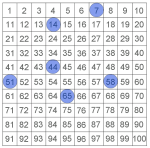
(30) Can you mark ten squares Sudoku-style, so that no two squares share the same row or column? Add up the numbers to get your score. Then try to find a different set of ten Sudoku-style squares. What do you notice? What do you wonder?
[Suggested by David Radcliffe.]

Share Your Ideas

Can you think of anything else we might do with a hundred chart? Add your ideas in the Comments section below, and I’ll add the best ones to our master list.