Video from the Global Math Project.
And here are some additional answers.
Try It at Home
Ask your kids the question: “What Is Math?”
I’d love to hear what they say!
Video from the Global Math Project.
And here are some additional answers.
Ask your kids the question: “What Is Math?”
I’d love to hear what they say!


What teacher hasn’t heard a student complain, “When am I ever going to have to use this?” Didn’t most of us ask it ourselves, once upon a time?
And unless we choose a math-intensive career like engineering, the truth is that after we leave school, most of us will never again use most of the math we learned.
But if math beyond arithmetic isn’t all that useful, then what’s the point?
If you or your student is singing the “Higher Math Blues,” here are some quotations that may cheer you up — or at least give you the strength of vision to keep on slogging.
I don’t want to convince you that mathematics is useful. It is, but utility is not the only criterion for value to humanity. Above all, I want to convince you that mathematics is beautiful, surprising, enjoyable, and interesting. In fact, mathematics is the closest that we humans get to true magic. How else to describe the patterns in our heads that — by some mysterious agency — capture patterns of the universe around us? Mathematics connects ideas that otherwise seem totally unrelated, revealing deep similarities that subsequently show up in nature.
— Ian Stewart
The Magical Maze
That vast book which stands forever open before our eyes, the universe, cannot be read until we have learnt the language in which it is written. It is written in mathematical language, and the letters are triangles, circles, and other geometrical figures, without which means it is humanly impossible to comprehend a single word.
— Galileo Galilei
quoted by Clifford Pickover, A Passion for Mathematics
The investigation of mathematical truths accustoms the mind to method and correctness in reasoning, and is an employment peculiarly worthy of rational beings.
— George Washington
quoted by William Dunham, The Mathematical Universe
I told myself, “Lincoln, you can never make a lawyer if you do not understand what demonstrate means.” So I left my situation in Springfield, went home to my father’s house, and stayed there till I could give any proposition in the six books of Euclid at sight. I then found out what “demonstrate” means, and went back to my law studies.
— Abraham Lincoln
quoted by William Dunham, The Mathematical Universe
In most sciences, one generation tears down what another has built, and what one has established another undoes. In mathematics alone, each generation adds a new story to the old structure.
— Herman Henkel
quoted by Noah benShea, Great Quotes to Inspire Great Teachers
Biographical history, as taught in our public schools, is still largely a history of boneheads: ridiculous kings and queens, paranoid political leaders, compulsive voyagers, ignorant generals — the flotsam and jetsam of historical currents. The men who radically altered history, the great scientists and mathematicians, are seldom mentioned, if at all.
— Martin Gardner
quoted by G. Simmons, Calculus Gems
I will not go so far as to say that constructing a history of thought without profound study of mathematical ideas is like omitting Hamlet from the play named after him. But it is certainly analogous to cutting out the part of Ophelia. For Ophelia is quite essential to the play, she is very charming. . . and a little mad.
— Alfred North Whitehead
quoted in The Viking Book of Aphorisms
The mathematician does not study pure mathematics because it is useful, he studies it because he delights in it, and he delights in it because it is beautiful.
— Henri Poincaré
quoted by Theoni Pappas, More Joy of Mathematics
A mathematician, like a painter or poet, is a maker of patterns. If his patterns are more permanent than theirs, it is because they are made with ideas. The mathematician’s patterns, like the painter’s or the poet’s, must be beautiful. The ideas, like the colors or the words, must fit together in a harmonious way. Beauty is the first test: there is no permanent place in this world for ugly mathematics.
— Godfrey H. Hardy
A Mathematician’s Apology
Mathematics is a world created by the mind of men, and mathematicians are people who devote their lives to what seems to me a wonderful kind of play!
At age eleven, I began Euclid, with my brother as tutor. This was one of the great events of my life, as dazzling as first love. I had not imagined there was anything so delicious in the world.
— Bertrand Russell
The Autobiography of Bertrand Russell
I love mathematics … principally because it is beautiful, because man has breathed his spirit of play into it, and because it has given him his greatest game — the encompassing of the infinite.
— Rózsa Péter
quoted by Rosemary Schmalz, Out of the Mouths of Mathematicians
Did you enjoy these? You can find plenty more on my Math & Education Quotations page.
CREDITS: Never Ending Math Problem photo (above) by Danny (blog post title added) via Flickr (CC BY 2.0).
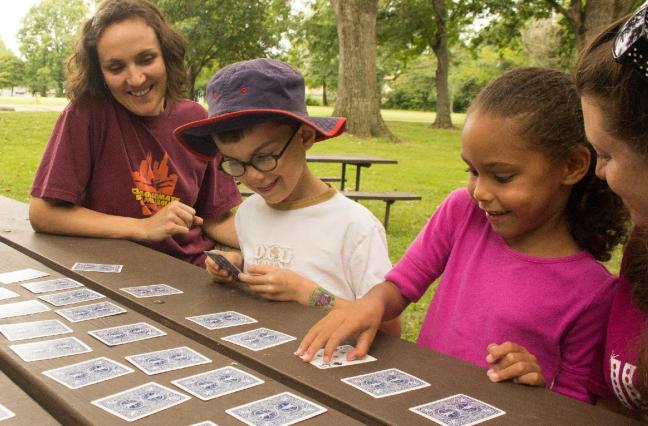
Take a break from textbook math and enjoy yourself!
I like to use games as a warm-up with my co-op math classes. Some homeschoolers make every Friday a game day, and some turn gaming into a family lifestyle.

“Playing games with your kids offers a host of educational benefits, plus you build relationships and make memories. I am constantly amazed by the amount of learning that happens when I sit down to play games with my children.”
—Caitlin Fitzpatrick Curley
Gameschool Challenge
“Games put children in exactly the right frame of mind for learning difficult things. Children relax when they play — and they concentrate. They don’t mind repeating certain facts or procedures over and over, if repetition is part of the game.”
“Coming back from winter break can be hard. Everyone is sleepy, unfocused, and daydreaming of the holiday gifts that await them at home after school. And that’s just the teachers!”
—Andrew Gael
Beat the Back to School Blues…Play a Math Game
“If you play these games and your child learns only that hard mental effort can be fun, you will have taught something invaluable.”
“Mathematics is mental play, the essence of creative problem solving. This is the truth we need to impart to our children, more important than fractions or decimals or even the times tables. Math is a game, playing with ideas.”
—Denise Gaskins
Let’s Play Math: How Families Can Learn Math Together—and Enjoy It
They don’t have to be math! Please share in the comment section below!
* * *
This blog is reader-supported.
If you’d like to help fund the blog on an on-going basis, then please join me on Patreon for mathy inspiration, tips, and an ever-growing archive of printable activities.
If you liked this post, and want to show your one-time appreciation, the place to do that is PayPal: paypal.me/DeniseGaskinsMath. If you go that route, please include your email address in the notes section, so I can say thank you.
Which I am going to say right now. Thank you!
“My Favorite Math Games” copyright © 2017 by Denise Gaskins. Image at the top of the post copyright © Denise Gaskins.
The first way to make your math blog grow is to write posts. Here’s an #MTBoS blog challenge that seems doable: Only one post a week, so maybe even I can keep up.
With the start of a new year, there is no better time to start a new blog! For those of you who have blogs, it is also the perfect time to get inspired to write again! Please join us to participate in this years blogging initiative…
Once you’ve got your post blogged, please share it with us!
The Math Teachers at Play (MTaP) blog carnival is a monthly collection of tips, tidbits, games, and activities for students and teachers of preschool through pre-college mathematics. We welcome entries from parents, students, teachers, homeschoolers, and just plain folks…
CREDITS: Spiral fractal photo (above) by Kent Schimke via Flickr (CC BY 2.0).]/span>
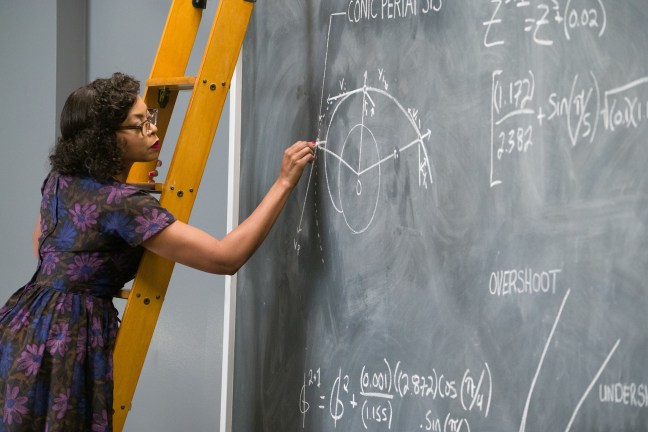
Are you taking your kids to see the movie Hidden Figures? Check out Raymond Johnson’s blog post for references and teaching ideas:
If you know of any other resources, please share in the comments below. And as I find new goodies, I’ll add them to the list below.
Before computers were machines, computers were people who computed things. This complicated task often fell to women because it was considered basically clerical. That’s right: computing triple integrals all day long qualified as clerical.
— Samantha Schumacher
Hidden Figures Movie Review
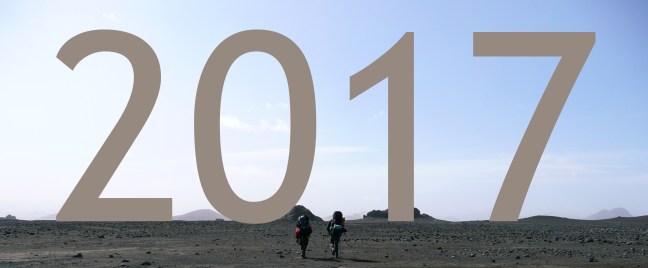

Two of the most popular New Year’s Resolutions are to spend more time with family and friends, and to get more exercise. The 2017 Mathematics Game is a prime opportunity to do both at once.
So grab a partner, slip into your workout clothes, and pump up those mental muscles!
For many years mathematicians, scientists, engineers and others interested in mathematics have played “year games” via e-mail and in newsgroups. We don’t always know whether it is possible to write expressions for all the numbers from 1 to 100 using only the digits in the current year, but it is fun to try to see how many you can find. This year may prove to be a challenge.
Use the digits in the year 2017 to write mathematical expressions for the counting numbers 1 through 100. The goal is adjustable: Young children can start with looking for 1-10, middle grades with 1-25.
Check out the new carnival of playful math for all ages at Math Misery? blog. You’re sure to enjoy this month’s collection of mathy fun.
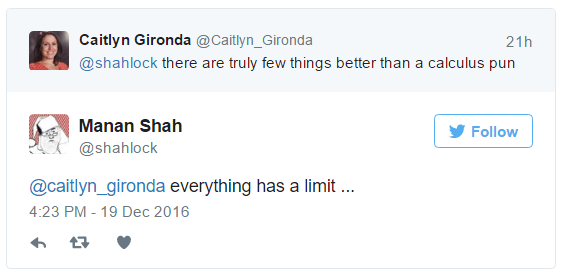
The carnival features prime numbers, self-referential logic, calculus puns, word problems, Pythagorean triples, arithmetic games, geometric coloring designs, and more.
Click here to go read the carnival blog!
Past carnivals are still full of mathy treasure. See them all on Pinterest:


Counting all the fractional variations, my massive blog post 30+ Things to Do with a Hundred Chart now offers nearly forty ideas for playing around with numbers from preschool to prealgebra.
Here is the newest entry:
(34) The Number Puzzle Game: Rachel created this fun cross between the hundred-chart jigsaw puzzle (#7) and Gomoku (#23). You can download the free 120-board version here or buy the complete set at Teachers Pay Teachers.
* * *
This blog is reader-supported.
If you’d like to help fund the blog on an on-going basis, then please join me on Patreon for mathy inspiration, tips, and an ever-growing archive of printable activities.
If you liked this post, and want to show your one-time appreciation, the place to do that is PayPal: paypal.me/DeniseGaskinsMath. If you go that route, please include your email address in the notes section, so I can say thank you.
Which I am going to say right now. Thank you!
“New Hundred Chart Game: Jigsaw Gomoku” copyright © 2016 by Denise Gaskins. Image at the top of the post copyright © geishaboy500 (CC BY 2.0).
Since I’ve been posting new Alexandria Jones stories this week (beginning here), I’ve gone back and re-read the old Christmas posts. I noticed that the original Graph-It Game included a religious design, but nothing for those who don’t celebrate Christmas.
So I updated the post with a new, non-religious puzzle. Here it is, if you want to play…
For this design, you will need graph paper with coordinates from −8 to +8 on both the x- and y-axis. Connect the points in each line. Stop at the periods, and then start a new line at the next point.
(-8,8) – (-8,0) – (0,8) – (-8,8) – (-4,4) – (0,4) – (0,8) – (8,8) – (4,4) – (0,8).
(8,8) – (8,0) – (4,0) – (4,-4) – (8,0) – (8,-8) – (0,-8) – (4,-4) – (0,-4) – (0,-8) – (-8,0) – (-8, -8) – (0,-8).
(-8,-8) – (4,4) – (0,4) – (4,0) – (4,4) – (8,0).
(8,-8) – (-4,4) – (-4,-4) – (0,-4) – (-4,0) – (-8,0).
(0,-2) – (0,-4) – (4,0) – (2,0) – (2,-2) – (-2,-2) – (-2,2) – (2,2) – (2,0) – (1,1) – (1,0) – (2,0) – (0,-2) – (-2,0) – (0,2) – (1,1) – (-1,1) – (-1,-1) – (1,-1) – (1,0) – (-4,0) – (0,4) – (0,-1) – (-1,0) – (0,1) – (1,0) – (0,-1) – (0,-2).
Color in your design and hang it up for the whole family to enjoy!
Of course, the fun of the Graph-It Game is to make up your own graphing puzzle. Can you create a coordinate design for your friends to draw?
You can see all the Alexandria Jones Christmas posts at a glance here:
CREDITS: “Love Christmas Lights” photo by Kristen Brasil via Flickr (CC BY 2.0).
 For toddler Renée’s Christmas gift, Alex and Leon crafted a puzzle set of wooden blocks.
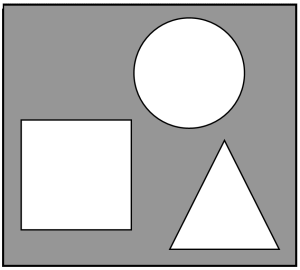
First, they made a sturdy box with circle, square, and triangle shapes cut in the lid.
To make the blocks large and baby-safe, Alex and Leon bought a 4-foot 2×2 board. Then they asked Uncle Will to help them create a set of special blocks to fit through the holes.
Each block was round and square and triangular, so it could fit exactly through any of the three holes.
How can that be?
Read all the posts from the December 2000/January 2001 issue of my Mathematical Adventures of Alexandria Jones newsletter.
CREDITS: “Christmas Tree Closeup” photo by Zechariah Judy via Flickr (CC BY 2.0).

