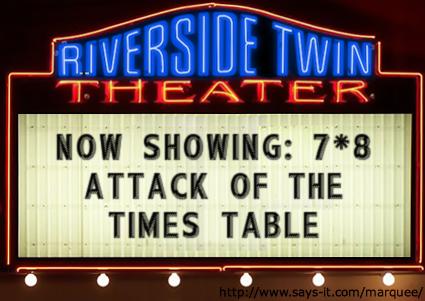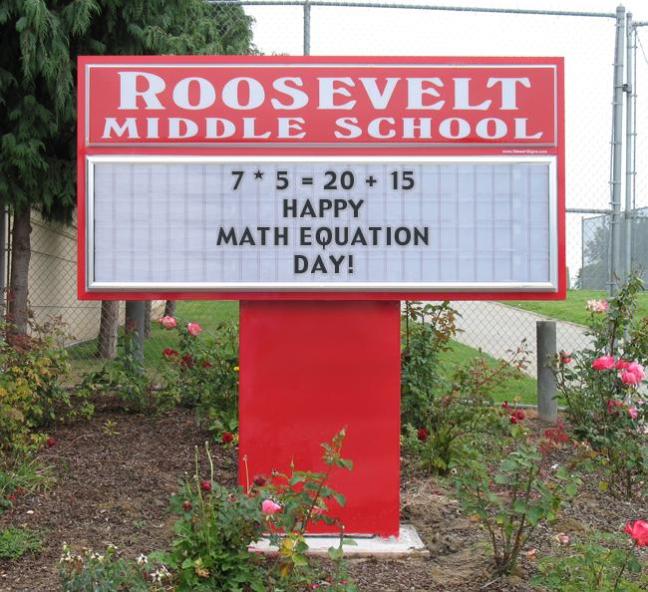
Happy Math Equation Day!

math equation day

Every Day Is Mathematics Day!

I’m still having fun with David Coffey’s meme, which started a couple of years ago with this blog post:

Make Your Own

Would you like to create a math holiday, too? Try one of these sign generators:

What kind of math will you celebrate? Leave a link to your Happy Math Day post in the comments below!

Infinite Cake: Don Cohen’s Infinite Series for Kids

Math Concepts: division as equal sharing, naming fractions, adding fractions, infinitesimals, iteration, limits
Prerequisite: able to identify fractions as part of a whole

This is how I tell the story:

  • We have a cake to share, just the two of us. It’s not TOO big a cake, ‘cuz we don’t want to get sick. An 8 × 8 or 16 × 16 square on the graph paper should be just right. Can you cut the cake so we each get a fair share? Color in your part.

Bobby Flay German Chocolate Cake

  • How big is your piece compared to the whole, original cake?
  • But you know, I’m on a diet, and I just don’t think I can eat my whole piece. Half the cake is too much for me. Is it okay if I share my piece with you? How can we divide it evenly, so we each get a fair share? How big is your new piece? Color it in.
  • How much of the whole, original cake do you have now? How can you tell?
  • I keep thinking of my diet, and I really don’t want all my piece of cake. It looks good, but it’s still just a bit too big for me. Will you take half of it? How big is that piece?
  • Now how much of the whole, original cake do you have? How could we figure it out?
    [Teaching tip: Don’t make kids do the calculation on paper. In the early stages, they can visualize and count up the fourths or maybe the eighths. As the pieces get smaller, the easiest way to find the sum is what Cohen does in the video below‌—‌identify how much of the cake is left out.]
  • Even for being on a diet, I still don’t feel very hungry…

Continue reading Infinite Cake: Don Cohen’s Infinite Series for Kids

Math Teachers at Play #85

[Feature photo by Tomruen via Wikimedia Commons.]

Do you enjoy math? I hope so! If not, browsing the articles linked in this post just may change your mind.

Welcome to the 85th edition of the Math Teachers At Play math education blog carnival‌—‌a smorgasbord of links to bloggers all around the internet who have great ideas for learning, teaching, and playing around with math from preschool to pre-college.

By tradition, we start the carnival with a short puzzle or activity. But if you would like to jump straight to our featured blog posts, click here to see the Table of Contents.

Let the mathematical fun begin!

Continue reading Math Teachers at Play #85

April 2015 Math Calendar

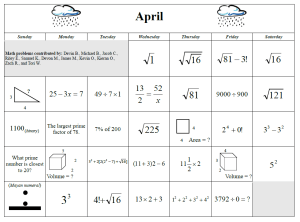
AprilMathCalendar

Six years ago, my homeschool co-op classes had fun creating this April calendar to hand out at our end-of-semester party. Looking at my regular calendar today, I noticed that April this year starts on Wednesday, just like it did back then. I wonder when’s the next time that will happen?

A math calendar is not as easy to read as a traditional calendar — it is more like a puzzle. The expression in each square simplifies to that day’s date, so your family can treat each day like a mini-review quiz: “Do you remember how to calculate this?”

The calendar my students made is appropriate for middle school and beyond, but you can make a math calendar with puzzles for any age or skill level. Better yet, encourage the kids to make puzzles of their own.

How to Use the Math Calendar

At home:
Post the calendar on your refrigerator. Use each math puzzle as a daily review “mini-quiz” for your children (or yourself).

In the classroom:
Post today’s calculation on the board as a warm-up puzzle. Encourage your students to make up “Today is…” puzzles of their own.

As a puzzle:
Cut the calendar squares apart, then challenge your students to arrange them in ascending (or descending) order.

Help Us Make the Next Math Calendar

If you like, you may use the following worksheet:

Submission details here: Kids’ Project — More Math Calendars?

Fun with the Impossible Penrose Triangle

I found this delightful animation today:

Ball-travels-around-impossible-triangle

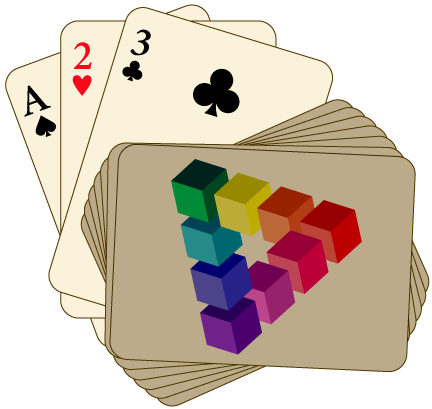
The ball is traveling around a shape that can’t exist in our real world: the Penrose triangle. This illusion is the basis for some cool art, like Escher’s Waterfall. And I’m using it in my Math You Can Play books as a design on the back of my playing cards:

A-2-3deck

Want to Play Around with the Penrose Triangle?

Here’s a few links so you can try it for yourself:

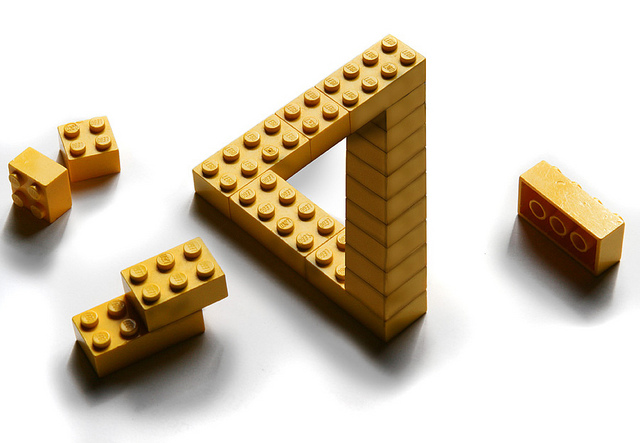
Penrose Lego by Erik Johansson (CC BY 2.0)

Book Update

Addition-Games

I’ve sent the first two Math You Can Play books to a copy editor (she edits the text part), so my focus this month is on finishing the illustrations and downloadable game boards. And designing the book covers — I think I’ll call this latest iteration done.

If everything stays on schedule, both Counting & Number Bonds and Addition & Subtraction should be available by mid- to late-spring. Fingers crossed…

2015 Mathematics Game

[Feature photo above by Scott Lewis and title background (right) by Carol VanHook, both via Flickr (CC BY 2.0, text added).]

2015YearGame

Did you know that playing games is one of the Top 10 Ways To Improve Your Brain Fitness? So slip into your workout clothes and pump up those mental muscles with the Annual Mathematics Year Game Extravaganza!

For many years mathematicians, scientists, engineers and others interested in math have played “year games” via e-mail. We don’t always know whether it’s possible to write all the numbers from 1 to 100 using only the digits in the current year, but it’s fun to see how many you can find.

Math Forum Year Game Site

Rules of the Game

Use the digits in the year 2015 to write mathematical expressions for the counting numbers 1 through 100. The goal is adjustable: Young children can start with looking for 1-10, middle grades with 1-25.

  • You must use all four digits. You may not use any other numbers.
  • Solutions that keep the year digits in 2-0-1-5 order are preferred, but not required.
  • You may use +, -, x, ÷, sqrt (square root), ^ (raise to a power), ! (factorial), and parentheses, brackets, or other grouping symbols.
  • You may use a decimal point to create numbers such as .2, .02, etc., but you cannot write 0.02 because we only have one zero in this year’s number.
  • You may create multi-digit numbers such as 10 or 201 or .01, but we prefer solutions that avoid them.

My Special Variations on the Rules

  • You MAY use the overhead-bar (vinculum), dots, or brackets to mark a repeating decimal. But students and teachers beware: you can’t submit answers with repeating decimals to Math Forum.
  • You MAY NOT use a double factorial, n!! = the product of all integers from 1 to n that have the same parity (odd or even) as n. Math Forum allows these, but I’ve decided I prefer my arithmetic straight.

Click here to continue reading.

Math Teachers at Play #79: Puzzles and Games

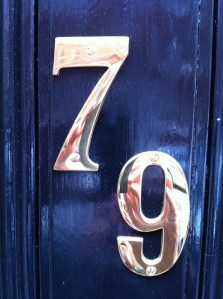
79

[Feature photo above by Jimmie, and “79” image (right) by Steve Bowbrick via flickr (CC BY 2.0).]

Do you enjoy math? I hope so! If not, browsing this post just may change your mind.

Welcome to the 79th edition of the Math Teachers At Play (MTaP) math education blog carnival — a smorgasbord of links to bloggers all around the internet who have great ideas for learning, teaching, and playing around with math from preschool to pre-college.

Let the mathematical fun begin!

By tradition, we start the carnival with a puzzle, game, or trivia tidbits. If you would like to jump straight to our featured blog posts, click here to see the Table of Contents.

Since I’ve been spending all my free time working on my upcoming Math You Can Play book series, I’m in the mood for games. So I found a few games featuring prime and nonprime numbers [which category is #79 — do you know?], and I’ll sprinkle some of my best-loved math game books throughout the carnival.

Continue reading Math Teachers at Play #79: Puzzles and Games

Math Storytelling Day: The Hospital Floor

[Feature photo above by Christiaan Triebert via flickr (CC BY 2.0).]

Have you ever heard of Math Storytelling Day? On September 25, people around the world celebrate mathematics by telling stories together. The stories can be real — like my story below — or fictional like the tale of Wizard Mathys from Fantasia and his crystal ball communication system.

Check out these posts for more information:

My Math Story

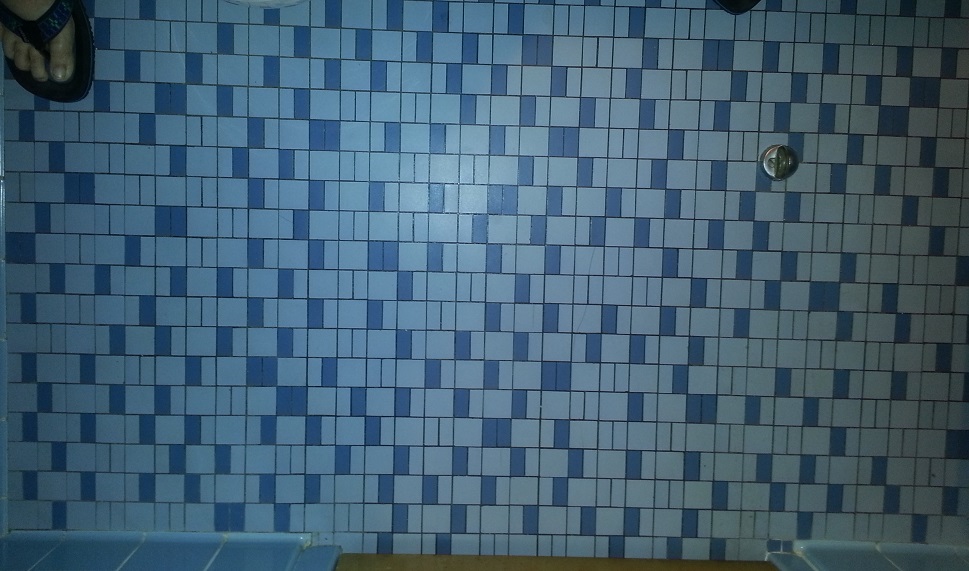
tiles2

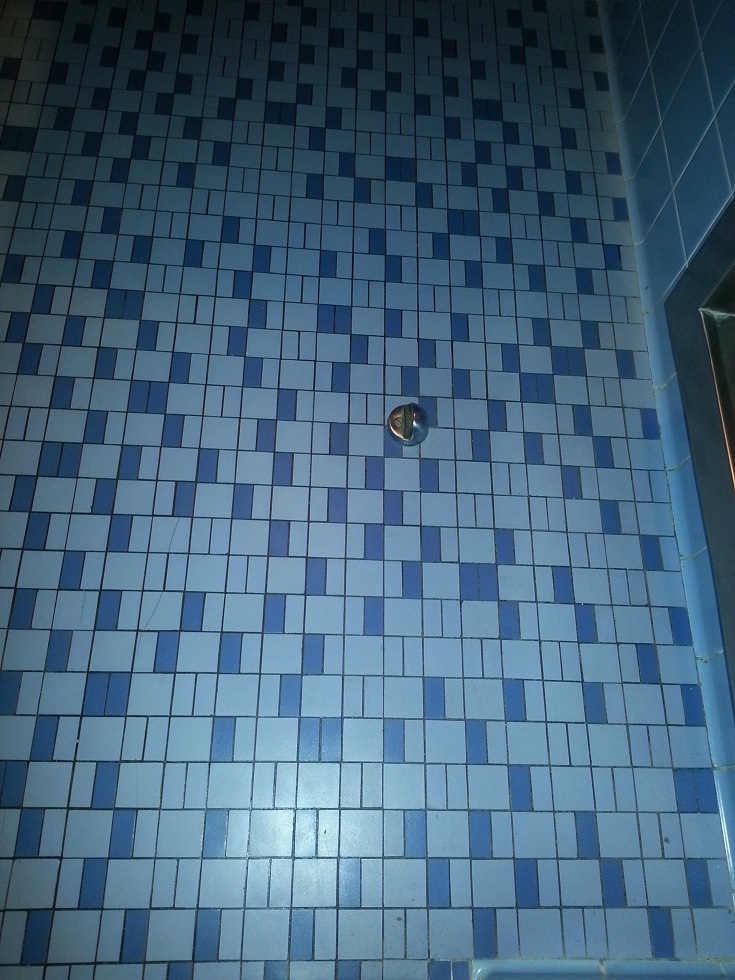
My story begins with an unexpected adventure in pain. Appendicitis sidewhacked my life last week, but that’s not the story. It’s just the setting. During my recovery, I spent a lot of time in the smaller room of my hospital suite. I noticed this semi-random pattern in the floor tile, which made me wonder:

  • Did they choose the pattern to keep their customers from getting bored while they were … occupied?
  • Is the randomness real? Or can I find a line of symmetry or a set of tiles that repeat?
  • If I take pictures from enough different angles, could I transfer the whole floor to graph paper for further study?
  • And if the nurse finds me doing this, will she send me to a different ward of the hospital? Do hospitals have psychiatric wards, or is that only in the movies?
  • What is the biggest chunk of squares I could “break out” from this pattern that would create the illusion of a regular, repeating tessellation?

I gave up on the graph paper idea (for now) and printed the pictures to play with. By my definition, “broken” pattern chunks need to be contiguous along the sides of the tiles, like pentominoes. Also, the edge of the chunk must be a clean break along the mortar lines. The piece can zigzag all over the place, but it isn’t allowed to come back and touch itself anywhere, even at a corner. No holes allowed.

I’m counting the plain squares as the unit and each of the smaller rectangles as a half square. So far, the biggest chunk of repeating tiles I’ve managed to break out is 283 squares.

tiles1

What Math Stories Will You Tell?

Have you and your children created any mathematical stories this year? I’d love to hear them! Please share your links in the comments section below.

 
* * *

This blog is reader-supported.

If you’d like to help fund the blog on an on-going basis, then please head to my Patreon page.

If you liked this post, and want to show your one-time appreciation, the place to do that is PayPal: paypal.me/DeniseGaskinsMath. If you go that route, please include your email address in the notes section, so I can say thank you.

Which I am going to say right now. Thank you!

“Math Storytelling Day: The Hospital Floor” copyright © 2014 by Denise Gaskins.

Math Teachers at Play #76

76[Feature photo (above) by U.S. Army RDECOM. Photo (right) by Stephan Mosel. (CC BY 2.0)]

On your mark… Get set… Go play some math!

Welcome to the 76th edition of the Math Teachers At Play math education blog carnival — a smorgasbord of links to bloggers all around the internet who have great ideas for learning, teaching, and playing around with math from preschool to pre-college.

By tradition, we start the carnival with a puzzle in honor of our 76th edition. But if you would like to jump straight to our featured blog posts, click here to see the Table of Contents.

Continue reading Math Teachers at Play #76

Playing With Math: Stories from Math Circles, Homeschoolers, and Passionate Teachers

body_Book_cover_for_upload

Update: The crowdfunding campaign is now closed and the book is in the final stages. It should be headed to the printer soon. Check the Playing With Math homepage for publication and ordering information.


There’s a problem: Most people don’t like math. Why is that? Perhaps it has something to do with the way math is taught in school. As a teacher to my own kids and mentor to homeschooling parents, I’ve been fighting math anxiety for decades.

This book is one part of the solution.

Playing With Math: Stories from Math Circles, Homeschoolers, and Passionate Teachers features more than thirty authors who tell delightful stories of learning to appreciate math and of sharing their enthusiasm with their communities, families, or students. After every chapter is a puzzle, game, or activity to get you and your kids playing with math, too.

You can read a couple of excerpts at PlayingWithMath.org:

Continue reading Playing With Math: Stories from Math Circles, Homeschoolers, and Passionate Teachers