Math Teachers at Play #76

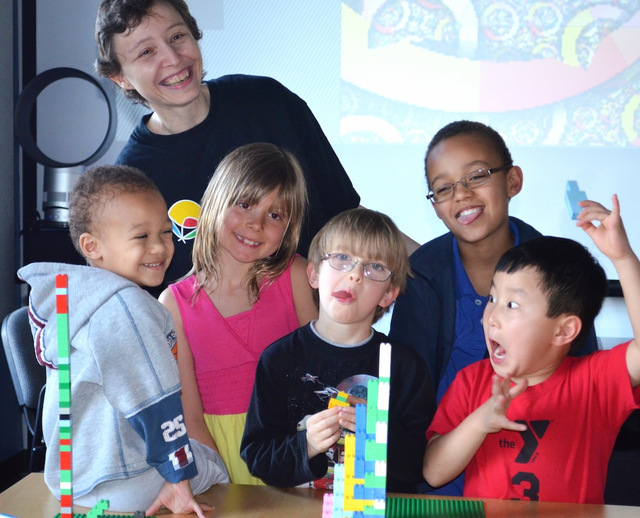
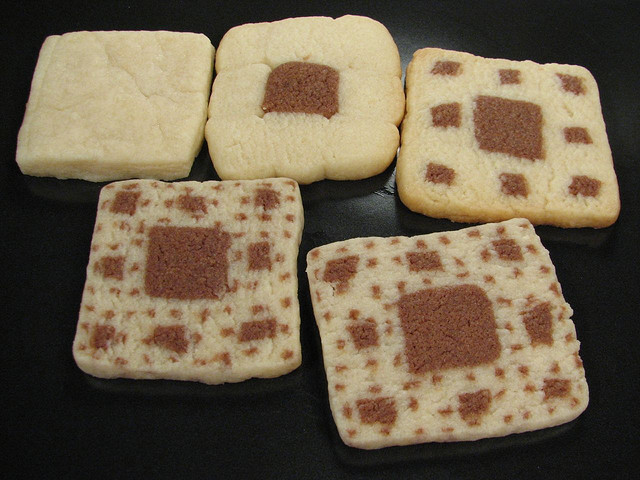
76[Feature photo (above) by U.S. Army RDECOM. Photo (right) by Stephan Mosel. (CC BY 2.0)]

On your mark… Get set… Go play some math!

Welcome to the 76th edition of the Math Teachers At Play math education blog carnival — a smorgasbord of links to bloggers all around the internet who have great ideas for learning, teaching, and playing around with math from preschool to pre-college.

By tradition, we start the carnival with a puzzle in honor of our 76th edition. But if you would like to jump straight to our featured blog posts, click here to see the Table of Contents.

Continue reading Math Teachers at Play #76

Playing With Math: Stories from Math Circles, Homeschoolers, and Passionate Teachers

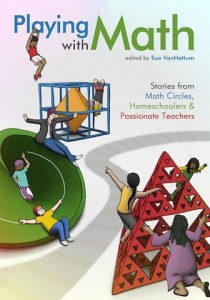
body_Book_cover_for_upload

Update: The crowdfunding campaign is now closed and the book is in the final stages. It should be headed to the printer soon. Check the Playing With Math homepage for publication and ordering information.


There’s a problem: Most people don’t like math. Why is that? Perhaps it has something to do with the way math is taught in school. As a teacher to my own kids and mentor to homeschooling parents, I’ve been fighting math anxiety for decades.

This book is one part of the solution.

Playing With Math: Stories from Math Circles, Homeschoolers, and Passionate Teachers features more than thirty authors who tell delightful stories of learning to appreciate math and of sharing their enthusiasm with their communities, families, or students. After every chapter is a puzzle, game, or activity to get you and your kids playing with math, too.

You can read a couple of excerpts at PlayingWithMath.org:

Continue reading Playing With Math: Stories from Math Circles, Homeschoolers, and Passionate Teachers

Pi Day Roundup

WhyPi

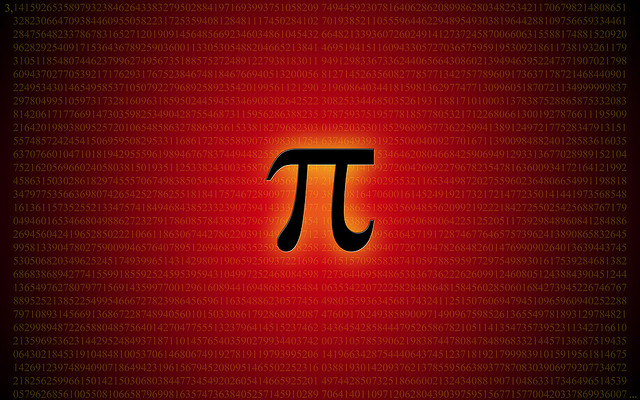
[Feature photo above by Nicolo’ Canali De Rossi.]

Math holiday alert: March 14th is Pi Day. But why limit ourselves to a single day? Playing with math should be a year-round adventure! Here are some ideas to help you celebrate…

Pi Day Posts on Let’s Play Math! Blog

DragonOfPi

Continue reading Pi Day Roundup

Math Teachers at Play #70

800px-Brauchtum_gesteck_70_1[Feature photo above by David Reimann via Bridges 2013 Gallery. Number 70 (right) from Wikimedia Commons (CC-BY-SA-3.0-2.5-2.0-1.0).]

Do you enjoy math? I hope so! If not, browsing this post just may change your mind.

Welcome to the 70th edition of the Math Teachers At Play math education blog carnival — a smorgasbord of 42+ links to bloggers all around the internet who have great ideas for learning, teaching, and playing around with math from preschool to pre-college. Let the mathematical fun begin!

By tradition, we start the carnival with a puzzle in honor of our 70th edition. But if you would like to jump straight to our featured blog posts, click here to see the Table of Contents.

Click here to continue reading.

2014 Mathematics Game

2014-Calendar

[Feature photo above by Artis Rams (CC BY 2.0) via flickr. Title background (right) by Dan Moyle (CC BY 2.0) via flickr]

Have you made a New Year’s resolution to spend more time with your family this year, and to get more exercise? Problem-solvers of all ages can pump up their (mental) muscles with the Annual Mathematics Year Game Extravaganza!

For many years mathematicians, scientists, engineers and others interested in mathematics have played “year games” via e-mail and in newsgroups. We don’t always know whether it is possible to write expressions for all the numbers from 1 to 100 using only the digits in the current year, but it is fun to try to see how many you can find.

Math Forum Year Game Site

Rules of the Game

Use the digits in the year 2014 to write mathematical expressions for the counting numbers 1 through 100. The goal is adjustable by age: Young children can start with looking for 1-10, or 1-25.

  • You must use all four digits. You may not use any other numbers.
  • Solutions that keep the year digits in 2-0-1-4 order are preferred, but not required.
  • You may use +, -, x, ÷, sqrt (square root), ^ (raise to a power), ! (factorial), and parentheses, brackets, or other grouping symbols.
  • You may use a decimal point to create numbers such as .2, .02, etc., but you cannot write 0.02 because we only have one zero in this year’s number.
  • You may use the overhead-bar (vinculum), dots, or brackets to mark a repeating decimal.
  • You may create multi-digit numbers such as 10 or 201 or .01, but we prefer solutions that avoid them.
  • You may use a double factorial, but we prefer solutions that avoid them. n!! = the product of all integers from 1 to n that have the same parity (odd or even) as n.

[Note to students and teachers: If you want to take part in the Math Forum Year Game, be warned that they do not allow repeating decimals.]

Click here to continue reading.

2013 Advent Math from Nrich

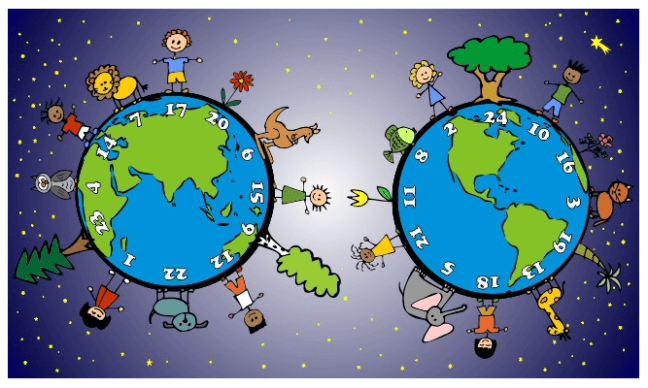
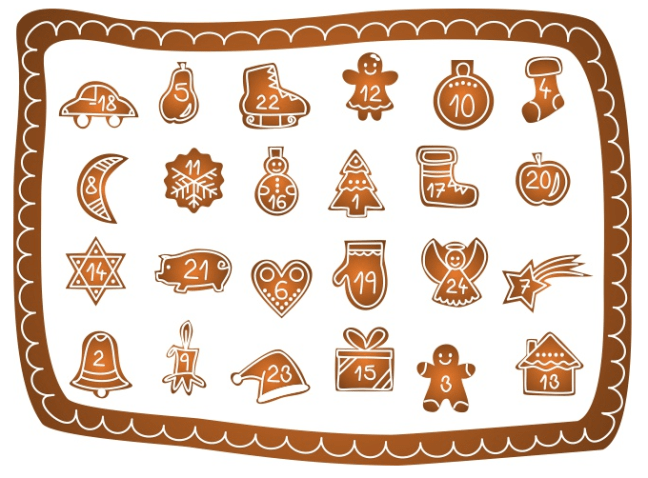
Click the images below to visit the Advent calendars, and your children can play with math every day until Christmas! You may also enjoy:

Primary Advent Calendar

“This Advent Calendar has a new activity for each day in the run-up to Christmas. All the activities are based on the theme of Planet Earth.”

advent1

Secondary Advent Calendar

“Behind each door of the Advent Calendar is one of our favourite activities with videos. Watch and enjoy!”

advent2

Algebra for (Almost) Any Age

VisualPatterns-org2

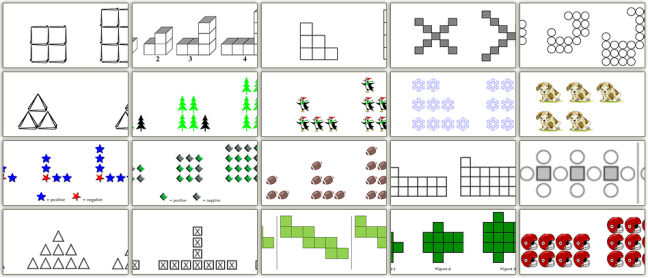
Fawn Nguyen’s Visual Patterns website just keeps getting better and better. Check it out:

In addition to the 115 puzzle patterns (as of this writing), the site features a Gallery page of patterns submitted by students. And under the “Teachers” tab, Fawn shares a form to guide students in thinking their way through to the algebraic formula for a pattern.

How can you use these patterns to develop algebraic thinking with younger students? Mike Lawler and sons demonstrate Pattern #1 in the YouTube video below.

A Math Major Talks About Fear

I’ve dipped my toes in Twitter lately (as part of the Explore #MTBoS program) and been swept up in a crashing tsunami of information. There’s no way to keep up with it all, but I’ll let the tide wash over me and enjoy the tidbits I happen to notice as they float by. For instance, yesterday I discovered a writer who offers tip on writing about injuries and was able to get some great advice for Kitten’s sequel to her first novel.

And then today, Steven Strogatz posted a link to Saramoira Shields, a new blogger I might never have discovered on my own. I think you’ll enjoy her video:

Happy Math Storytelling Day

Feature photo (above) by L. Marie. Math comic by davidd. Both via flickr (CC BY 2.0).
Math-ter and Commander

Hooray for September 25th — it’s Math Storytelling Day!

Celebrate Math Storytelling Day by making up and sharing math stories. Everyone loves a story, so this is a great way to motivate your children to play around with math. What might a math story involve? Patterns, logic, history, puzzles, relationships, fictional characters, … and yes, even numbers.

For inspiration, visit:

Have you and your children created any math stories? We’d love to hear! Please share your links in the comments section below.

Continue reading Happy Math Storytelling Day

Math Teachers at Play #66

[Feature photo above by Franz & P via flickr. Route 66 sign by Sam Howzit via flickr. (CC BY 2.0)]
Route 66 Sign

Welcome to the Math Teachers At Play blog carnival — which is not just for math teachers! If you like to learn new things and play around with ideas, you are sure to find something of interest.

By tradition, we start the carnival with a couple of puzzles in honor of our 66th edition.

Let the mathematical fun begin!

Puzzle 1

how crazy 66

Our first puzzle is based on one of my favorite playsheets from the Miquon Math workbook series. Fill each shape with an expression that equals the target number. Can you make some cool, creative math?

Click the image to download the pdf playsheet set: one page has the target number 66, and a second page is blank so you can set your own target number.

Continue reading Math Teachers at Play #66