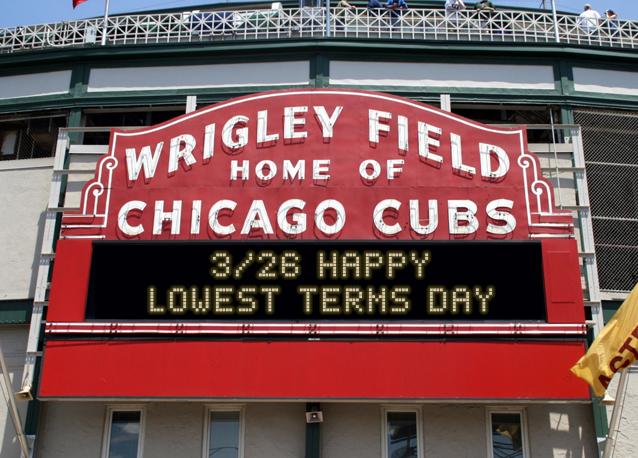
I’m still having fun with David Coffey’s meme:
If we want to teach our children to think mathematically, we need to model and encourage asking questions. For instance:
What questions does the video inspire for you? I’d love to hear your comments!
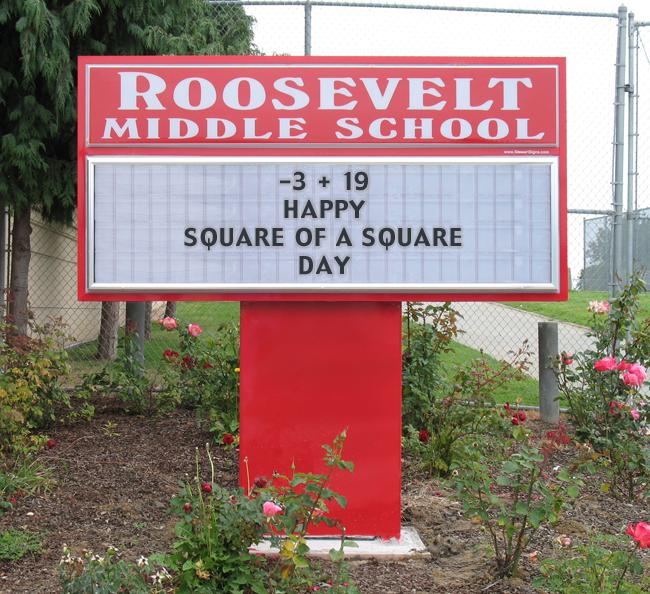
Make your own “Happy Math Day” sign:
Here’s a fun activity for any age that will encourage your children to play with numbers:
What do you think math is all about? What do your children think? Here is the start of a promising new video series:

 [Feature photo (above) by Alex Kehr. Photo (right) by kirstyhall via flickr.]
Welcome to the Math Teachers At Play blog carnival — a smorgasbord of ideas for learning, teaching, and playing around with math from preschool to pre-college. If you like to learn new things and play around with ideas, you are sure to find something of interest.
Let the mathematical fun begin…
By tradition, we start the carnival with a pair of puzzles in honor of our 58th edition. Click to download the pdf:

Continue reading Math Teachers at Play #58: Crazy, Funny Math
Vi Hart is back with some wintery fun!
Sunday, October 21, is the worldwide hexaflexagon party in honor of Martin Gardner’s birthday. Gardner’s article about hexaflexagons launched his career as a recreational math guru who inspired people all around the world to love math.
Here’s how to join in the fun:
[Photo by bumeister1 via flickr.]
Welcome to the Math Teachers At Play blog carnival — which is not just for math teachers! We have games, lessons, and learning activities from preschool math to calculus. If you like to learn new things and play around with mathematical ideas, you are sure to find something of interest.
Scattered between all the math blog links, I’ve included highlights from the Common Core Standards for Mathematical Practice, which describe the types of expertise that teachers at all levels — whether in traditional, experimental, or home schools — should seek to develop in their math students.
Let the mathematical fun begin…
By tradition, we start the carnival with a couple of puzzles in honor of our 52nd edition. Since there are 52 playing cards in a standard deck, I chose two card puzzles from the Maths Is Fun Card Puzzles page:
The answers are at Maths Is Fun, but don’t look there. Having someone give you the answer is no fun at all!

[Feature photo above by Keoni Cabral via Flickr (CC BY 2.0).]
My favorite playful math lessons rely on adult/child conversation — a proven method for increasing a child’s reasoning skills. What better way could there be to do math than snuggled up on a couch with your little one, or side by side at the sink while your middle-school student helps you wash the dishes, or passing the time on a car ride into town?
As soon as your little ones can count past five, start giving them simple, oral story problems to solve: “If you have a cookie and I give you two more cookies, how many cookies will you have then?”
The fastest way to a young child’s mind is through the taste buds. Children can easily visualize their favorite foods, so we use mainly edible stories at first. Then we expand our range, adding stories about other familiar things: toys, pets, trains.

photo by puuikibeach via flickr
Our homeschool co-op held an end-of-semester assembly. Each class was supposed to demonstrate something they had learned. I planned to set up a static display showing some of our projects, like the fractal pop-up card and the game of Nim, but the students voted to do a skit based on the logic puzzles of Raymond Smullyan.
We had a small class (only four students), but you can easily divide up the lines make room for more players. We created signs from half-sheets of poster board with each native’s line on front and whether she was a knight or knave on the flip side. In the course of a skit, there isn’t enough time to really think through the puzzles, so the audience had to vote based on first impressions — which gave us a fair showing of all opinions on each puzzle.
 Denise Gaskins' Let's Play Math