Math Teachers at Play #39

Welcome to the Math Teachers At Play blog carnival — which is not just for math teachers! If you like to learn new things and play around with ideas, you are sure to find something of interest.

Several of these articles were submitted by the bloggers; others were drawn from my overflowing blog reader. Don’t try to skim everything all at once, but take the time to enjoy browsing. Savor a few posts today, and then come back for another helping tomorrow or next week.

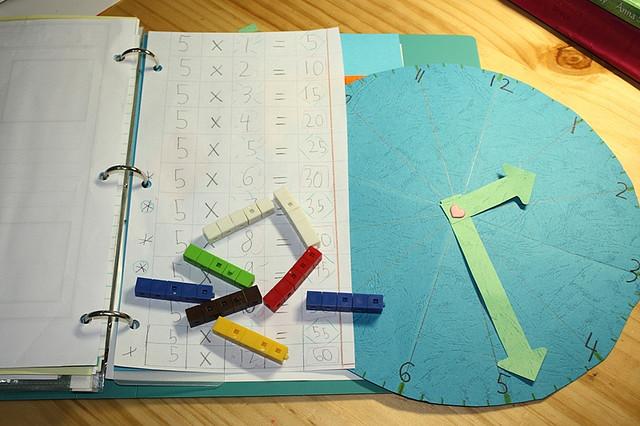
Most of the photos below are from the 2010 MAA Found Math Gallery; click each image for more details. Quotations are from Mike Cook’s Canonical List of Math Jokes.

Let the mathematical fun begin…

Continue reading Math Teachers at Play #39

Math Teachers at Play #35

35 is a tetrahedral number

Welcome to the Math Teachers At Play blog carnival — which is not just for math teachers.

Do you enjoy math? I hope so! If not, browsing these links just may change your mind. Most of these posts were submitted by the bloggers themselves; others are drawn from my overflowing Google Reader. From preschool to high school, there are plenty of interesting things to learn.

Let the mathematical fun begin…

Continue reading Math Teachers at Play #35

2011 Mathematics Game

[Photo from Wikipedia.]

Two of the most popular New Year’s Resolutions are to spend more time with family and friends, and to get more exercise. The 2011 Mathematics Game is a chance to do both at once.

So grab a partner, slip into your workout clothes, and pump up those mental muscles!

Here are the rules:

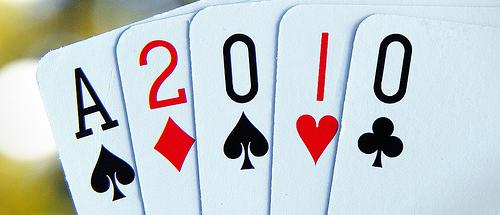
Use the digits in the year 2011 to write mathematical expressions for the counting numbers 1 through 100.

  • All four digits must be used in each expression. You may not use any other numbers except 2, 0, 1, and 1.
  • You may use the arithmetic operations +, -, x, ÷, sqrt (square root), ^ (raise to a power), and ! (factorial). You may also use parentheses, brackets, or other grouping symbols.
  • You may use a decimal point to create numbers such as .1, .02, etc.
  • Multi-digit numbers such as 20 or 102 may be used, but preference is given to solutions that avoid them.

Bonus Rules
You may use the overhead-bar (vinculum), dots, or brackets to mark a repeating decimal.

You may use multifactorials:

  • (n!)! = a factorial of a factorial, which is not the same as a multifactorial
  • n!! = a double factorial = the product of all integers from 1 to n that have the same parity (odd or even) as n
  • n!!! = a triple factorial = the product of all integers from 1 to n that are equal to n mod 3

[Note to teachers: The bonus rules are not part of the Math Forum guidelines. They make a significant difference in the number of possible solutions, however, and they should not be too difficult for high school students or advanced middle schoolers.]

Continue reading 2011 Mathematics Game

And the Baby Is . . .

[Photo by gabi menashe.] This story is continued from Alexandria Jones and the Eighty-Yard Drive…

There was a time-out on the field, and the Jones family sat down for a brief rest. Sam asked, “How do babies decide when it’s time to be born?”

“Well, son, it has to do with numbers. You see,” Uncle Will explained, “the baby spends his first month thinking about the number one.”

“That’s not much to think about,” Sam said. “But I suppose he can’t handle much at that age.”

Continue reading And the Baby Is . . .

Alex Deals Out Equations

Miscellaneous Playing Cards
Image by incurable_hippie via Flickr

Looking around the room, Alex saw kids and parents moving from one table to another. Everyone seemed to be enjoying the Homeschool Math Carnival. She had six junior-high and high school students at her table, waiting while she shuffled her deck of cards.

“Okay,” she said. “These are Math Cards. I took out the face cards, so we just have numbers.”

Continue reading Alex Deals Out Equations