My Favorite Math Games

Take a break from textbook math and enjoy yourself!

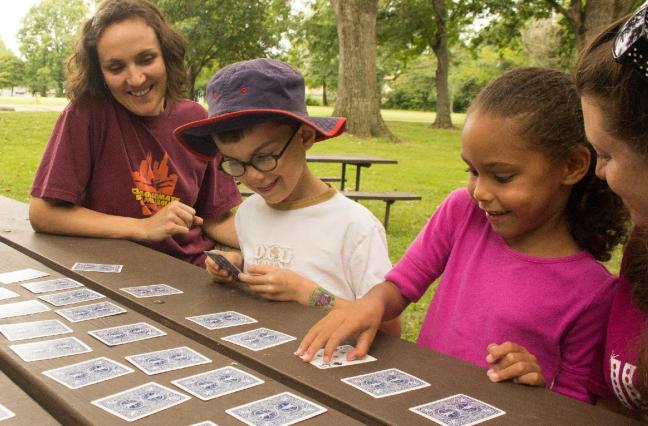
I like to use games as a warm-up with my co-op math classes. Some homeschoolers make every Friday a game day, and some turn gaming into a family lifestyle.

favorite-math-games

“Playing games with your kids offers a host of educational benefits, plus you build relationships and make memories. I am constantly amazed by the amount of learning that happens when I sit down to play games with my children.”

—Caitlin Fitzpatrick Curley
Gameschool Challenge

Family Games for All Ages

“Games put children in exactly the right frame of mind for learning difficult things. Children relax when they play — and they concentrate. They don’t mind repeating certain facts or procedures over and over, if repetition is part of the game.”

Peggy Kaye
Games for Math

Accessible to Young Children

“Coming back from winter break can be hard. Everyone is sleepy, unfocused, and daydreaming of the holiday gifts that await them at home after school. And that’s just the teachers!”

—Andrew Gael
Beat the Back to School Blues…Play a Math Game

For Elementary Students

“If you play these games and your child learns only that hard mental effort can be fun, you will have taught something invaluable.”

Peggy Kaye
Games for Math

Middle School to Adult

“Mathematics is mental play, the essence of creative problem solving. This is the truth we need to impart to our children, more important than fractions or decimals or even the times tables. Math is a game, playing with ideas.”

—Denise Gaskins
Let’s Play Math: How Families Can Learn Math Together—and Enjoy It

Your Turn: What Are Your Favorite Games?

They don’t have to be math! Please share in the comment section below!

 
* * *

This blog is reader-supported.

If you’d like to help fund the blog on an on-going basis, then please join me on Patreon for mathy inspiration, tips, and an ever-growing archive of printable activities.

If you liked this post, and want to show your one-time appreciation, the place to do that is PayPal: paypal.me/DeniseGaskinsMath. If you go that route, please include your email address in the notes section, so I can say thank you.

Which I am going to say right now. Thank you!

“My Favorite Math Games” copyright © 2017 by Denise Gaskins. Image at the top of the post copyright © Denise Gaskins.

2017 Mathematics Game

Two of the most popular New Year’s Resolutions are to spend more time with family and friends, and to get more exercise. The 2017 Mathematics Game is a prime opportunity to do both at once.

So grab a partner, slip into your workout clothes, and pump up those mental muscles!

For many years mathematicians, scientists, engineers and others interested in mathematics have played “year games” via e-mail and in newsgroups. We don’t always know whether it is possible to write expressions for all the numbers from 1 to 100 using only the digits in the current year, but it is fun to try to see how many you can find. This year may prove to be a challenge.

Math Forum Year Game Site

Rules of the Game

Use the digits in the year 2017 to write mathematical expressions for the counting numbers 1 through 100. The goal is adjustable: Young children can start with looking for 1-10, middle grades with 1-25.

  • You must use all four digits. You may not use any other numbers.
  • Solutions that keep the year digits in 2-0-1-7 order are preferred, but not required.
  • You may use +, -, x, ÷, sqrt (square root), ^ (raise to a power), ! (factorial), and parentheses, brackets, or other grouping symbols.
  • You may use a decimal point to create numbers such as .2, .02, etc., but you cannot write 0.02 because we only have one zero in this year’s number.
  • You may create multi-digit numbers such as 10 or 201 or .01, but we prefer solutions that avoid them.

My Special Variations on the Rules

  • You MAY use the overhead-bar (vinculum), dots, or brackets to mark a repeating decimal. But students and teachers beware: you can’t submit answers with repeating decimals to Math Forum.
  • You MAY use a double factorial, n!! = the product of all integers from 1 to n that have the same parity (odd or even) as n. I’m including these because Math Forum allows them, but I personally try to avoid the beasts. I feel much more creative when I can wrangle a solution without invoking them.

Click here to continue reading.

New Hundred Chart Game: Jigsaw Gomoku

100chart

Counting all the fractional variations, my massive blog post 30+ Things to Do with a Hundred Chart now offers nearly forty ideas for playing around with numbers from preschool to prealgebra.

Here is the newest entry:

(34) The Number Puzzle Game: Rachel created this fun cross between the hundred-chart jigsaw puzzle (#7) and Gomoku (#23). You can download the free 120-board version here or buy the complete set at Teachers Pay Teachers.

 
* * *

This blog is reader-supported.

If you’d like to help fund the blog on an on-going basis, then please join me on Patreon for mathy inspiration, tips, and an ever-growing archive of printable activities.

If you liked this post, and want to show your one-time appreciation, the place to do that is PayPal: paypal.me/DeniseGaskinsMath. If you go that route, please include your email address in the notes section, so I can say thank you.

Which I am going to say right now. Thank you!

“New Hundred Chart Game: Jigsaw Gomoku” copyright © 2016 by Denise Gaskins. Image at the top of the post copyright © geishaboy500 (CC BY 2.0).

A New Graph-It Puzzle

Since I’ve been posting new Alexandria Jones stories this week (beginning here), I’ve gone back and re-read the old Christmas posts. I noticed that the original Graph-It Game included a religious design, but nothing for those who don’t celebrate Christmas.

So I updated the post with a new, non-religious puzzle. Here it is, if you want to play…

Graph-It Game Design

For this design, you will need graph paper with coordinates from −8 to +8 on both the x- and y-axis. Connect the points in each line. Stop at the periods, and then start a new line at the next point.

(-8,8) – (-8,0) – (0,8) – (-8,8) – (-4,4) – (0,4) – (0,8) – (8,8) – (4,4) – (0,8).

(8,8) – (8,0) – (4,0) – (4,-4) – (8,0) – (8,-8) – (0,-8) – (4,-4) – (0,-4) – (0,-8) – (-8,0) – (-8, -8) – (0,-8).

(-8,-8) – (4,4) – (0,4) – (4,0) – (4,4) – (8,0).

(8,-8) – (-4,4) – (-4,-4) – (0,-4) – (-4,0) – (-8,0).

(0,-2) – (0,-4) – (4,0) – (2,0) – (2,-2) – (-2,-2) – (-2,2) – (2,2) – (2,0) – (1,1) – (1,0) – (2,0) – (0,-2) – (-2,0) – (0,2) – (1,1) – (-1,1) – (-1,-1) – (1,-1) – (1,0) – (-4,0) – (0,4) – (0,-1) – (-1,0) – (0,1) – (1,0) – (0,-1) – (0,-2).

Color in your design and hang it up for the whole family to enjoy!

Now Make Your Own

Of course, the fun of the Graph-It Game is to make up your own graphing puzzle. Can you create a coordinate design for your friends to draw?

Want More?

You can see all the Alexandria Jones Christmas posts at a glance here:

CREDITS: “Love Christmas Lights” photo by Kristen Brasil via Flickr (CC BY 2.0).

The Mysterious Block Puzzle

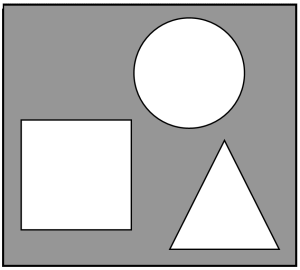
3-way-block-puzzleFor toddler Renée’s Christmas gift, Alex and Leon crafted a puzzle set of wooden blocks.

First, they made a sturdy box with circle, square, and triangle shapes cut in the lid.

To make the blocks large and baby-safe, Alex and Leon bought a 4-foot 2×2 board. Then they asked Uncle Will to help them create a set of special blocks to fit through the holes.

Each block was round and square and triangular, so it could fit exactly through any of the three holes.

How can that be?

To Be Continued…

Read all the posts from the December 2000/January 2001 issue of my Mathematical Adventures of Alexandria Jones newsletter.

CREDITS: “Christmas Tree Closeup” photo by Zechariah Judy via Flickr (CC BY 2.0).

How to Make a Flexagon Christmas Card

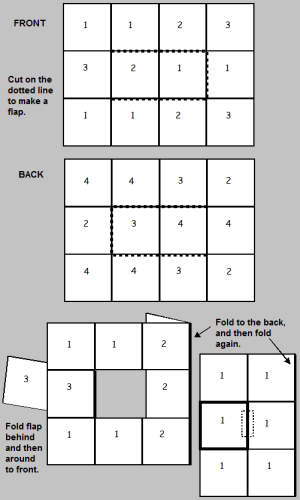
tetra-tetraflexagonHere’s how Alex created tetra-tetraflexagon Christmas cards to send to her friends:
1. Buy a pack of heavy paper at the office supply store. Regular construction paper tears too easily.

2. Measure and divide the paper into fourths one direction and thirds the other way. Fold each line backward and forward a few times.

3. Number the front and back of the paper in pencil, lightly, as shown. Then carefully cut a center flap along the dotted lines.

4. Fold the paper along the dark lines as shown, so the center flap sticks out from underneath and the right-hand column shows all 2’s.

5. Fold the flap the rest of the way around to the front and fold the right-hand column under again. (Shown as dark lines on the diagram.) This makes the front of the flexagon show 1’s in every square.

6. Carefully, tape the flap to its neighbor on the folded column. Don’t let the tape stick to any but these two squares.

7. Gently erase your pencil marks.

Find All the Faces

A tetra-tetraflexagon has four faces: front, back, and two hidden. It is shaped like a tetragon — better known as a rectangle.

Here’s how to flex your tetra-tetraflexagon card:

  • Face 1 is easy to find. It’s on top when you make the card.
  • Turn the card over to find Face 2.
  • Face 3 is hidden behind Face 2. Fold your flexagon card in half (vertically) so that Face 1 disappears. Unfold Face 2 at the middle, like opening a book. Face 3 should appear like magic.
  • Face 4 is hidden behind Face 3. Fold the card (vertically) to hide Face 2, then open the middle of Face 3. Face 2 vanishes, and Face 4 is finally revealed.

When Faces 2 and 3 are folded to the back, you will notice that any pictures you drew on them will look scrambled. What happened?

Add Your Designs

Alex wrote a holiday greeting on Face 1. Then she drew Christmas pictures on the other three faces of her card.

To Be Continued…

Read all the posts from the December 2000/January 2001 issue of my Mathematical Adventures of Alexandria Jones newsletter.

CREDITS: “Happy Holidays” photo by Mike Brand via Flickr (CC BY 2.0). Video by Shaireen Selamat of DynamicEducator.com.

Christmas with Alexandria Jones

Alexandria Jones and her family are fictional characters from my old Mathematical Adventures newsletter. Their stories appear sporadically as I find time to transcribe them from the back-issues. You can find them all on this blog page.

Here are all the Alexandria Jones stories Christmas stories, with activity and craft ideas…

Alexandria Jones and the Christmas Present Quandary

Alex designs tessellation wrapping paper, hunts for the perfect Christmas tree, and comes up with a lively present for her brother. We meet the rest of Alex’s family — her father was introduced in an earlier issue — along with historical figures Maria Agnesi and Leonhard Euler, and we take a brief glance at mathematics from China.

Alexandria Jones and the Christmas Gifts

Most of this issue focuses on other topics — but the Jones family has a new baby, so Alex makes two gifts.

And New This Year: Alexandria Jones and the Magic Christmas Cards

Dr. Jones suggests a way to make the “best Christmas cards ever” (according to Alex), and the Jones children create geometric gifts to celebrate the holiday.

Count Up to Christmas

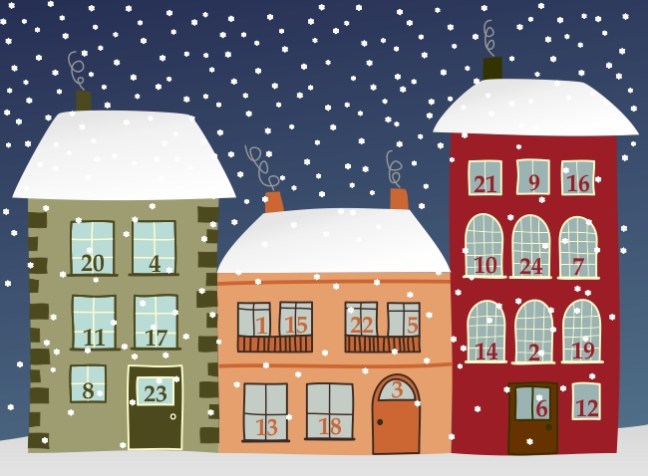
secondary-starBack when we were still homeschooling, I always dropped the “regularly scheduled program” in December. School plus holiday prep added up to one stressed-out mom.
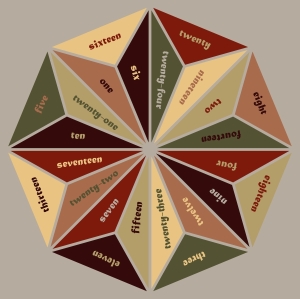
Instead, we read plenty of library books. And we played around with informal activities like the NrichMaths Advent Calendars:

For older students and adults, the online Plus Magazine offers a calendar of daily tidbits from their “Maths in a minute” series, explaining important mathematical concepts in just a few words”

And for still more winter fun, check out the links in my old Christmas Math Puzzles and Activities post.

And a Question for You

How do you handle schoolwork during this busy season? I’m collecting new links for an updated Holiday Math post next month. I’d love to hear your ideas!

The Value of Math Games

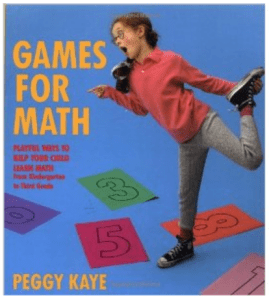
From Peggy Kaye’s classic book Games for Math:

Kaye-Games4Math

“Games put children in exactly the right frame of mind for learning difficult things.

“Children relax when they play — and they concentrate. They don’t mind repeating certain facts or procedures over and over, if repetition is part of the game.

“Children throw themselves into playing games the way they never throw themselves into filling out workbook pages.

“The games solidify the achievements of children who are already good at math, and they shore up children who need shoring up. They teach or reinforce many of the skills that a formal curriculum teaches, plus one skill that formal teaching sometimes leaves out — the skill of having fun with math, of thinking hard and enjoying it.

“If you play these games and your child learns only that hard mental effort can be fun, you will have taught something invaluable.”

Peggy Kaye
Games for Math

Sample Peggy’s Games for Math

 
* * *

This blog is reader-supported.

If you’d like to help fund the blog on an on-going basis, then please join me on Patreon for mathy inspiration, tips, and an ever-growing archive of printable activities.

If you liked this post, and want to show your one-time appreciation, the place to do that is PayPal: paypal.me/DeniseGaskinsMath. If you go that route, please include your email address in the notes section, so I can say thank you.

Which I am going to say right now. Thank you!

“The Value of Math Games” copyright © 2016 by Denise Gaskins.

Join the Fun: Math & Magic Virtual Book Club

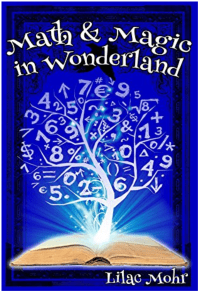
Math-Magic-WonderlandEleven weeks of mathematical playtime kicks off this week over at Learners in Bloom blog.

Each week, we’ll be playing with the math, language, and logic topics found in a single chapter. I’ll be posting ideas for extension activities, videos demonstrating the concepts for the week, and additional resources. I’m really excited for the opportunity to share all the extra ideas that have been floating around my brain which I didn’t have room to include in the book (as in Marco Polo’s famous words: “I did not tell half of what I saw.”)

— Lilac Mohr

Here’s a Quick Taste of Week One

This Week’s Activities

Lilac’s blog post includes a full schedule for the eleven-week book club, featuring plenty of classic math puzzlers to play with. Here are the topics for this week.

  • Read Chapter 1: Mrs. Magpie’s Manual
  • Alliteration
  • Memorizing digits of Pi
  • Palindromes
  • Calculating your age on other planets

It looks like a lot of fun. I highly recommend the book (read my review), and I’m sure you and your children will enjoy discovering math and magic with Lulu and Elizabeth.

Check it out: Math & Magic in Wonderland Virtual Book Club, Week One.

 
* * *

This blog is reader-supported.

If you’d like to help fund the blog on an on-going basis, then please join me on Patreon for mathy inspiration, tips, and an ever-growing archive of printable activities.

If you liked this post, and want to show your one-time appreciation, the place to do that is PayPal: paypal.me/DeniseGaskinsMath. If you go that route, please include your email address in the notes section, so I can say thank you.

Which I am going to say right now. Thank you!

“Join the Fun: Math & Magic Virtual Book Club” copyright © 2016 by Denise Gaskins.