How to Succeed in Math: Answer-Getting vs. Problem-Solving

You want your child to succeed in math because it opens so many doors in the future.

But kids have a short-term perspective. They don’t really care about the future. They care about getting through tonight’s homework and moving on to something more interesting.

So how can you help your child learn math?

When kids face a difficult math problem, their attitude can make all the difference. Not so much their “I hate homework!” attitude, but their mathematical worldview.

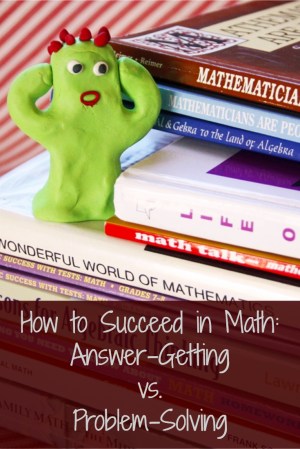
Does your child see math as answer-getting? Or as problem-solving?

Answer-getting asks “What is the answer?”, decides whether it is right, and then goes on to the next question.

Problem-solving asks “Why do you say that?” and listens for the explanation.

Problem-solving is not really interested in “right” or “wrong”—it cares more about “makes sense” or “needs justification.”

Homeschool Memories

In our quarter-century-plus of homeschooling, my children and I worked our way through a lot of math problems. But often, we didn’t bother to take the calculation all the way to the end.

Why didn’t I care whether my kids found the answer?

Because the thing that intrigued me about math was the web of interrelated ideas we discovered along the way:

  • How can we recognize this type of problem?
  • What other problems are related to it, and how can they help us understand this one? Or can this problem help us figure out those others?
  • What could we do if we had never seen a problem like this one before? How would we reason it out?
  • Why does the formula work? Where did it come from, and how is it related to basic principles?
  • What is the easiest or most efficient way to manipulative the numbers? Does this help us see more of the patterns and connections within our number system?
  • Is there another way to approach the problem? How many different ways can we think of? Which way do we like best, and why?

What Do You think?

How did you learn math? Did your school experience focus on answer-getting or problem-solving?

How can we help our children learn to think their way through math problems?

I’d love to hear from you! Please share your opinions in the Comments section below.

CREDITS: “Math Phobia” photo by Jimmie (blog post title added) via Flickr (CC BY 2.0). Phil Daro video by SERP Media (the Strategic Education Research Partnership) via Vimeo.

Mindset for Learning Math

Playing with a new image editor, I came across this Winston Churchill quote. What a great description of how it feels to learn math!

If you have a student who struggles with math or is suffering from a loss of enthusiasm, check out Jo Boaler’s free online course on developing a mathematical mindset:

Or explore some of the playful activity ideas for all ages in her Week of Inspirational Math.

How to Talk Math With Your Kids

A friend shared this video, and I loved it! From Kent Haines, a father who happens to also be a math teacher…

“I hope that this video helps parents find new ways of interacting with their kids on math topics.”

Kent Haines

More from Kent Haines

Advice and Examples of Talking Math with Kids

Danielson-Talking Math

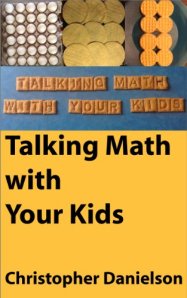
If you enjoyed Kent’s video, you’ll love Christopher Danielson’s book and blog.

It’s a short book with plenty of great stories, advice, and conversation-starters. While Danielson writes directly to parents, the book will also interest grandparents, aunts & uncles, teachers, and anyone else who wants to help children notice and think about math in daily life.

“You don’t need special skills to do this. If you can read with your kids, then you can talk math with them. You can support and encourage their developing mathematical minds.
 
“You don’t need to love math. You don’t need to have been particularly successful in school mathematics. You just need to notice when your children are being curious about math, and you need some ideas for turning that curiosity into a conversation.
 
“In nearly all circumstances, our conversations grow organically out of our everyday activity. We have not scheduled “talking math time” in our household. Instead, we talk about these things when it seems natural to do so, when the things we are doing (reading books, making lunch, riding in the car, etc) bump up against important mathematical ideas.
 
“The dialogues in this book are intended to open your eyes to these opportunities in your own family’s life.”

— Christopher Danielson
Talking Math with Your Kids

 
* * *

This blog is reader-supported.

If you’d like to help fund the blog on an on-going basis, then please join me on Patreon for mathy inspiration, tips, and an ever-growing archive of printable activities.

If you liked this post, and want to show your one-time appreciation, the place to do that is PayPal: paypal.me/DeniseGaskinsMath. If you go that route, please include your email address in the notes section, so I can say thank you.

Which I am going to say right now. Thank you!

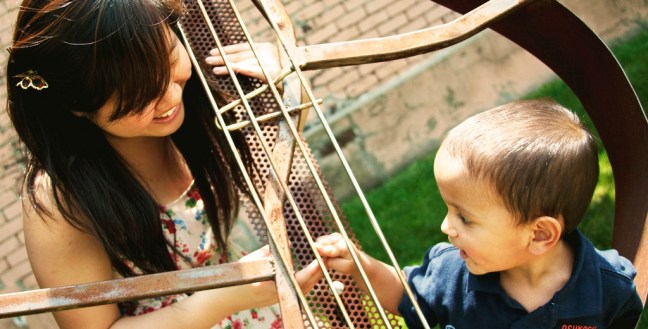
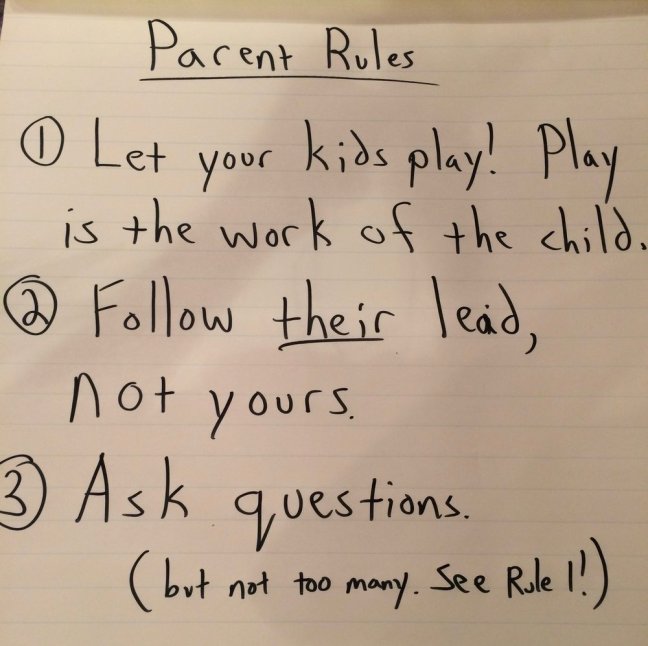
“How to Talk Math With Your Kids” copyright © 2017 by Denise Gaskins. “Kids Talk” photo (top) by Victoria Harjadi via Flickr (CC BY 2.0). “Parent Rules” by Kent Haines.

Math Humor and Copywork

Homeschool Memories…

The more years we spent homeschooling, the more I appreciated Charlotte Mason’s work and tried to incorporate her ideas into our laid-back, eclectic, not-quite-unschooling program.

We never fit the typical Charlotte Mason mold. Mosquitos and natural laziness limited our nature walks, and our version of narration was much too informal.

But those are just techniques, methods.

What really interests me in Mason’s writing is the philosophy behind the methods. Two points resonated: That we must respect our children as persons in their own right. And that we must provide a generous, wide-ranging feast to their minds.

Striving to live out those principles had a profound influence on our day-to-day homeschooling.

Continue reading Math Humor and Copywork

Even a Math Workbook Can Be a Game

Homeschool Memories…

My youngest daughter wanted to do Singapore math. Miquon Red was her main math text at the time, but we added a bit of Singapore Primary Math 1B whenever she was in the mood.

We turned to the lesson on subtracting with numbers in the 30-somethings.

Continue reading Even a Math Workbook Can Be a Game

Rabbit Trails and Fibonacci Poetry

Homeschool Memories…

Well, I hadn’t planned on spending my day that way. But one of the great things about homeschooling is the freedom to follow rabbit trails.

While browsing the Carnival of Homeschooling, I found a link to Farm School blog’s article Fib Foolery, which sent me to Gotta Book for his articles The Fib and More Fibbery (read the comments on both threads, but be warned that some are crude) and several other posts, all of which set me off on a morning of poetic fun.

A “Fib” is a Fibonacci poem. It’s based on syllable count, like a haiku, but the lines follow the Fibonacci counting series: 1, 1, 2, 3, 5, 8… Each number is the sum of the previous two numbers.

I knew what I was going to share at our Tuesday Teatime and Poetry Reading that afternoon.

Continue reading Rabbit Trails and Fibonacci Poetry

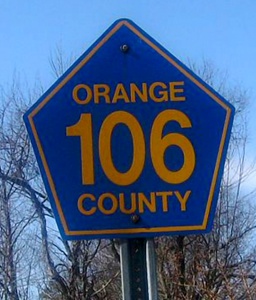
Playful Math Education Carnival 106 with Math Art

Do you enjoy math? I hope so! If not, browsing this post just may change your mind.
Welcome to the 106th edition of the Math Teachers At Play math education blog carnival — a smorgasbord of links to bloggers all around the internet who have great ideas for learning, teaching, and playing around with math from preschool to pre-college. Let the mathematical fun begin!

By tradition, we start the carnival with a puzzle in honor of our 106th edition. But if you would like to jump straight to our featured blog posts, click here to see the Table of Contents.

Try This Puzzle

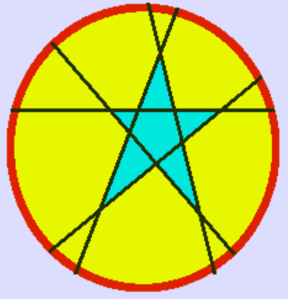
If you slice a pizza with a lightsaber, you’ll make straight cuts all the way across. Slice it once, and you get two pieces.


If you slice it five times, you’ll get a maximum of sixteen pieces. (And if you’re lucky you might get a star!)

  • How many times would you have to slice the pizza to get 106 pieces?

Click here for all the mathy goodness!

FAQ: Homeschool Burnout

“Spring cleaning has made my desk look worse than before. Nobody feels like studying. The kids would rather be outside, and their mom would rather take a nap. If I line everyone up on the curb in the morning, do you think the yellow bus will take them?”

Homeschool burnout — it’s a perennial problem. If you’re suffering from lethargy and can’t face another day of school work, here are some ideas that kept me going long enough to graduate almost-five kids (my “baby” finishes homeschooling this spring!):

(1) Re-read the homeschooling books on your shelves, or get some new ones from the library. Write down your favorite quotes as you read. Try to read about one a month, to help get your enthusiasm back. And then read at least one new homeschooling book per year to help you stay inspired.

Continue reading FAQ: Homeschool Burnout

Visualizing Word Problems with Bar Model Diagrams

A friend emailed me, frustrated with her child’s math lesson on bar diagrams: “Why do they have to make it so complicated? Why can’t we just solve the blasted problem?”

I told her bar models themselves are not the goal. The real question for parents and teachers is:

  • What can you do when your child is stumped by a math word problem?

To solve word problems, students must be able to read and understand what is written. They need to visualize this information in a way that will help them translate it into a mathematical expression.

visualizing-word-problems

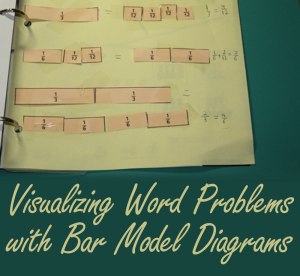
Bar model diagrams are one very useful tool to aid this visualization. These pictures model the word problem in a way that makes the solution appear almost like magic.

It is a trick well worth learning, no matter which math program you use.

Visualization

https://www.youtube.com/watch?v=HKsYDzQK8Zw

“Visualization is the brain’s ability to see beyond what the eyes can see, and we can develop visualization in many ways.”

The Bar Model Explained

https://www.youtube.com/watch?v=I6Ipio8JntU

“A bar model is a way to represent a situation in a word problem using diagrams — in particular, using rectangles.”

https://www.youtube.com/watch?v=i7LAHc1qvig

“This is one of the ideas that children learn in mathematics: the use of diagrams to represent quantities, especially quantities which are unknown.”

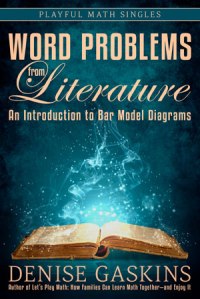
Word Problems from Literature

I’ve written a series of blog posts that explain bar model diagrams from the most basic through to solving multistep word problems. Check them out:

I’ve started working on a book about bar model diagrams, and I’d love to hear your input. Have you tried using them? Do they help your children? What questions do you have?

Update: My New Book

You can help prevent math anxiety by giving your children the mental tools they need to conquer the toughest story problems.

Check out Word Problems from Literature: An Introduction to Bar Model Diagrams—now available at all your favorite online bookstores!

And there’s a Student Workbook, too.

CREDITS: Videos and quotations from Dr. Yeap Ban Har’s YouTube channel. “Girl doing homework” photo (top) by ND Strupler and “math notebooking equal fractions” by Jimmie via Flickr (CC BY 2.0).

My Favorite Math Games

Take a break from textbook math and enjoy yourself!

I like to use games as a warm-up with my co-op math classes. Some homeschoolers make every Friday a game day, and some turn gaming into a family lifestyle.

favorite-math-games

“Playing games with your kids offers a host of educational benefits, plus you build relationships and make memories. I am constantly amazed by the amount of learning that happens when I sit down to play games with my children.”

—Caitlin Fitzpatrick Curley
Gameschool Challenge

Family Games for All Ages

“Games put children in exactly the right frame of mind for learning difficult things. Children relax when they play — and they concentrate. They don’t mind repeating certain facts or procedures over and over, if repetition is part of the game.”

Peggy Kaye
Games for Math

Accessible to Young Children

“Coming back from winter break can be hard. Everyone is sleepy, unfocused, and daydreaming of the holiday gifts that await them at home after school. And that’s just the teachers!”

—Andrew Gael
Beat the Back to School Blues…Play a Math Game

For Elementary Students

“If you play these games and your child learns only that hard mental effort can be fun, you will have taught something invaluable.”

Peggy Kaye
Games for Math

Middle School to Adult

“Mathematics is mental play, the essence of creative problem solving. This is the truth we need to impart to our children, more important than fractions or decimals or even the times tables. Math is a game, playing with ideas.”

—Denise Gaskins
Let’s Play Math: How Families Can Learn Math Together—and Enjoy It

Your Turn: What Are Your Favorite Games?

They don’t have to be math! Please share in the comment section below!

 
* * *

This blog is reader-supported.

If you’d like to help fund the blog on an on-going basis, then please join me on Patreon for mathy inspiration, tips, and an ever-growing archive of printable activities.

If you liked this post, and want to show your one-time appreciation, the place to do that is PayPal: paypal.me/DeniseGaskinsMath. If you go that route, please include your email address in the notes section, so I can say thank you.

Which I am going to say right now. Thank you!

“My Favorite Math Games” copyright © 2017 by Denise Gaskins. Image at the top of the post copyright © Denise Gaskins.